Readings Newsletter
Become a Readings Member to make your shopping experience even easier.
Sign in or sign up for free!
You’re not far away from qualifying for FREE standard shipping within Australia
You’ve qualified for FREE standard shipping within Australia
The cart is loading…


This title is printed to order. This book may have been self-published. If so, we cannot guarantee the quality of the content. In the main most books will have gone through the editing process however some may not. We therefore suggest that you be aware of this before ordering this book. If in doubt check either the author or publisher’s details as we are unable to accept any returns unless they are faulty. Please contact us if you have any questions.
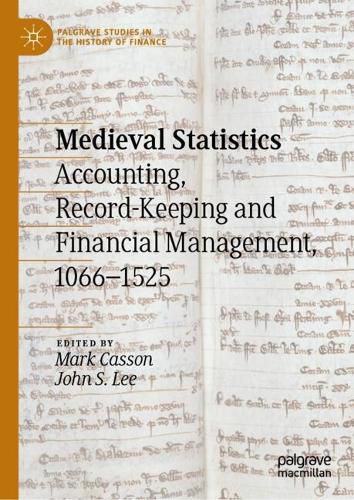
This book is the first to systematically examine the sources of medieval statistics. It will be useful as a handbook for researchers in financial and cultural history, as a history of financial record-keeping, and as a review of recent research into medieval finance and accounting based on statistical sources.
Medieval statistics provide a unique window on the past. Medieval documents produced by royal governments, monastic and ecclesiastical institutions, urban boroughs and legal cases for debt recovery provide a mine of useful information on economic life and financial affairs. They show that medieval administration was far more numerate, and far more sophisticated than is usually recognized. This book provides a comprehensive review of the key sources, written by leading experts in the field. The strengths and weaknesses of each source are reviewed, using original documents for illustration, and discussing examples from the recent literature. The book is mainly concerned with English statistics, as they have survived particularly well in both state and private records, but which showcase the potential of digital technology in enabling systematic study of medieval primary sources where large databases can now be compiled from original manuscripts. This edited volume will be a valuable tool for those working in financial, cultural, and political history, as it seeks to analyse the various ways in which medieval life was documented numerically and the ways in which this information was used within existing power structures.
$9.00 standard shipping within Australia
FREE standard shipping within Australia for orders over $100.00
Express & International shipping calculated at checkout
Stock availability can be subject to change without notice. We recommend calling the shop or contacting our online team to check availability of low stock items. Please see our Shopping Online page for more details.
This title is printed to order. This book may have been self-published. If so, we cannot guarantee the quality of the content. In the main most books will have gone through the editing process however some may not. We therefore suggest that you be aware of this before ordering this book. If in doubt check either the author or publisher’s details as we are unable to accept any returns unless they are faulty. Please contact us if you have any questions.
This book is the first to systematically examine the sources of medieval statistics. It will be useful as a handbook for researchers in financial and cultural history, as a history of financial record-keeping, and as a review of recent research into medieval finance and accounting based on statistical sources.
Medieval statistics provide a unique window on the past. Medieval documents produced by royal governments, monastic and ecclesiastical institutions, urban boroughs and legal cases for debt recovery provide a mine of useful information on economic life and financial affairs. They show that medieval administration was far more numerate, and far more sophisticated than is usually recognized. This book provides a comprehensive review of the key sources, written by leading experts in the field. The strengths and weaknesses of each source are reviewed, using original documents for illustration, and discussing examples from the recent literature. The book is mainly concerned with English statistics, as they have survived particularly well in both state and private records, but which showcase the potential of digital technology in enabling systematic study of medieval primary sources where large databases can now be compiled from original manuscripts. This edited volume will be a valuable tool for those working in financial, cultural, and political history, as it seeks to analyse the various ways in which medieval life was documented numerically and the ways in which this information was used within existing power structures.
Search our extensive online catalogue.
