Readings Newsletter
Become a Readings Member to make your shopping experience even easier.
Sign in or sign up for free!
You’re not far away from qualifying for FREE standard shipping within Australia
You’ve qualified for FREE standard shipping within Australia
The cart is loading…


This title is printed to order. This book may have been self-published. If so, we cannot guarantee the quality of the content. In the main most books will have gone through the editing process however some may not. We therefore suggest that you be aware of this before ordering this book. If in doubt check either the author or publisher’s details as we are unable to accept any returns unless they are faulty. Please contact us if you have any questions.
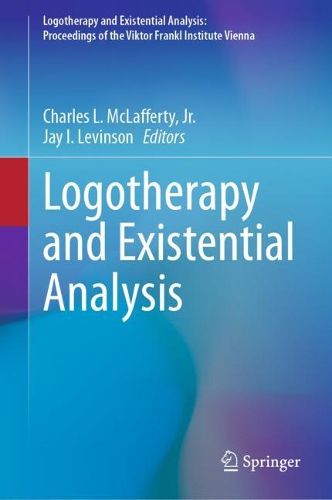
The second volume in the series presents ground-breaking advances of Viktor Frankl's logotherapy and existential analysis, with emphasis on the discovery of meaning as central to coping, resilience, and growth. Noted contributors from around the world present empirical and case study evidence for the importance of meaning in diverse populations and settings, as well as theoretical and philosophical perspectives on Frankl's body of thought.
The book opens with a historical perspective of the development of logotherapy and personal experiences of those close to Frankl. A section on the amelioration of suffering provides insights into moral injury and finding meaning in blows of fate (unavoidable suffering, death, the injustice of poverty, and international conflict). Powerful case studies address Frankl's tragic triad (guilt, suffering, death): facing the end of life, PTSD, childhood sexual abuse/neglect, and suicide prevention. Empirical studies address the search for purpose in life, qualities of meaning among the gifted, and service motivation in college students. Meaning-centered approaches are applied to working with youth and adults in schools and the workplace. Philosophical applications of logotherapy connect Frankl's theory with Buddhist thought and a flaw in the nature vs. nurture theory; the dimensional ontology is expanded into four dimensions. Book reviews evaluate topics of interest to logotherapists.
Topics include:
Case studies using logotherapy in diverse settings Meaning-centered programs and interventions in the workplace Innovative approaches to finding meaning with at-risk children and young adults Applications of logotherapy in military and childhood PTSD Cross-disciplinary collaboration of logotherapy with rational-emotive therapy, cognitive behavior therapy, positive psychology and Theravada Buddhism Philosophical applications and extensions of logotheory Empirical studies on processes and measures of logotherapy
Volume II of Logotherapy and Existential Analysis is intended for caregivers, practitioners, researchers, and students in the fields of logotherapy, mental health, education, workplace management, industrial psychology, and laypeople interested in finding meaning.
$9.00 standard shipping within Australia
FREE standard shipping within Australia for orders over $100.00
Express & International shipping calculated at checkout
Stock availability can be subject to change without notice. We recommend calling the shop or contacting our online team to check availability of low stock items. Please see our Shopping Online page for more details.
This title is printed to order. This book may have been self-published. If so, we cannot guarantee the quality of the content. In the main most books will have gone through the editing process however some may not. We therefore suggest that you be aware of this before ordering this book. If in doubt check either the author or publisher’s details as we are unable to accept any returns unless they are faulty. Please contact us if you have any questions.
The second volume in the series presents ground-breaking advances of Viktor Frankl's logotherapy and existential analysis, with emphasis on the discovery of meaning as central to coping, resilience, and growth. Noted contributors from around the world present empirical and case study evidence for the importance of meaning in diverse populations and settings, as well as theoretical and philosophical perspectives on Frankl's body of thought.
The book opens with a historical perspective of the development of logotherapy and personal experiences of those close to Frankl. A section on the amelioration of suffering provides insights into moral injury and finding meaning in blows of fate (unavoidable suffering, death, the injustice of poverty, and international conflict). Powerful case studies address Frankl's tragic triad (guilt, suffering, death): facing the end of life, PTSD, childhood sexual abuse/neglect, and suicide prevention. Empirical studies address the search for purpose in life, qualities of meaning among the gifted, and service motivation in college students. Meaning-centered approaches are applied to working with youth and adults in schools and the workplace. Philosophical applications of logotherapy connect Frankl's theory with Buddhist thought and a flaw in the nature vs. nurture theory; the dimensional ontology is expanded into four dimensions. Book reviews evaluate topics of interest to logotherapists.
Topics include:
Case studies using logotherapy in diverse settings Meaning-centered programs and interventions in the workplace Innovative approaches to finding meaning with at-risk children and young adults Applications of logotherapy in military and childhood PTSD Cross-disciplinary collaboration of logotherapy with rational-emotive therapy, cognitive behavior therapy, positive psychology and Theravada Buddhism Philosophical applications and extensions of logotheory Empirical studies on processes and measures of logotherapy
Volume II of Logotherapy and Existential Analysis is intended for caregivers, practitioners, researchers, and students in the fields of logotherapy, mental health, education, workplace management, industrial psychology, and laypeople interested in finding meaning.
Search our extensive online catalogue.
