Readings Newsletter
Become a Readings Member to make your shopping experience even easier.
Sign in or sign up for free!
You’re not far away from qualifying for FREE standard shipping within Australia
You’ve qualified for FREE standard shipping within Australia
The cart is loading…


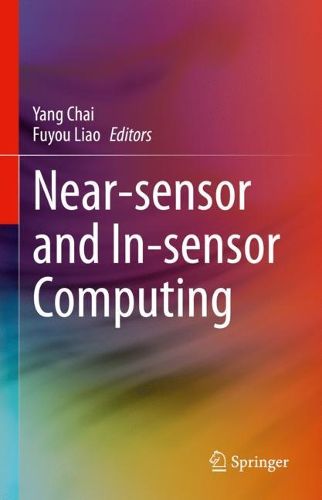
This book provides a detailed introduction to near-sensor and in-sensor computing paradigms, their working mechanisms, development trends and future directions. The authors also provide a comprehensive review of current progress in this area, analyze existing challenges in the field, and offer possible solutions. Readers will benefit from the discussion of computing approaches that intervene in the vicinity of or inside sensory networks to help process data more efficiently, decreasing power consumption and reducing the transfer of redundant data between sensing and processing units.
Provides readers with a detailed introduction to the near-sensor and in-sensor computing paradigms; Includes in-depth and comprehensive summaries of the state-of-the-art development in this field; Discusses and compares various neuromorphic sensors and neural networks: Describes integration technology for near-/in-sensor computing; Reveals the relationship between near-/in-sensor computing and other computing paradigms, such as neuromorphic computing, edge computing, intuitive computing, and in-memory computing.
$9.00 standard shipping within Australia
FREE standard shipping within Australia for orders over $100.00
Express & International shipping calculated at checkout
Stock availability can be subject to change without notice. We recommend calling the shop or contacting our online team to check availability of low stock items. Please see our Shopping Online page for more details.
This book provides a detailed introduction to near-sensor and in-sensor computing paradigms, their working mechanisms, development trends and future directions. The authors also provide a comprehensive review of current progress in this area, analyze existing challenges in the field, and offer possible solutions. Readers will benefit from the discussion of computing approaches that intervene in the vicinity of or inside sensory networks to help process data more efficiently, decreasing power consumption and reducing the transfer of redundant data between sensing and processing units.
Provides readers with a detailed introduction to the near-sensor and in-sensor computing paradigms; Includes in-depth and comprehensive summaries of the state-of-the-art development in this field; Discusses and compares various neuromorphic sensors and neural networks: Describes integration technology for near-/in-sensor computing; Reveals the relationship between near-/in-sensor computing and other computing paradigms, such as neuromorphic computing, edge computing, intuitive computing, and in-memory computing.
Search our extensive online catalogue.
