Readings Newsletter
Become a Readings Member to make your shopping experience even easier.
Sign in or sign up for free!
You’re not far away from qualifying for FREE standard shipping within Australia
You’ve qualified for FREE standard shipping within Australia
The cart is loading…


This title is printed to order. This book may have been self-published. If so, we cannot guarantee the quality of the content. In the main most books will have gone through the editing process however some may not. We therefore suggest that you be aware of this before ordering this book. If in doubt check either the author or publisher’s details as we are unable to accept any returns unless they are faulty. Please contact us if you have any questions.
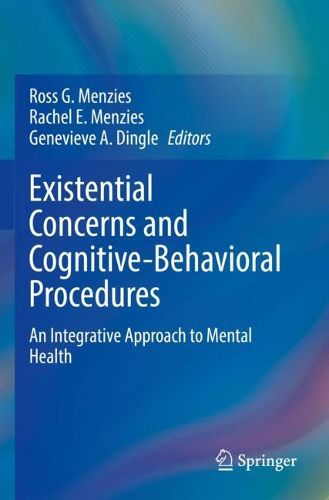
Clients enter therapy grappling with a range of difficulties. They don't speak in diagnostic terms, but instead focus on the everyday problems that confront them. Their struggles may include isolation, loneliness, anxiety, guilt and regret, and problems making decisions in a world that offers seemingly endless choice. In contrast, the cognitive-behavior therapist is trained in the language of conditioning and extinction, avoidance and safety behaviors, behavioral activation and attentional biases. This book explores the ideas of the existentialist philosophers as a bridge between the suffering client and technically trained clinician. The volume is not a rejection of cognitive behavior therapy (CBT), but seeks to place CBT in the broader context of the most popular philosophic tradition of the 19th and 20th centuries.
Therapists versed in existentialism argue that the individual's starting point is characterized by a sense of disorientation in the face of an apparently meaningless and absurd world. Each individual must become solely responsible for giving meaning to life and living it passionately and authentically. Each of us must confront the 'Big 5' existential issues of death, isolation, identity, freedom and meaning and find our solutions to these problems.
The present volume explores each of these existential themes in turn. Each section opens with a theoretical chapter describing the relevant existential dilemma and its impact on human experience. The second chapter in each section explores its relationship to mental health disorders and psychopathology. The third chapter in each section explores the evidence for treating the existential issue from a CBT framework. This book will be of value to those interested in CBT, philosophy and mental health, and will appeal to psychotherapists, clinical psychologists and psychiatrists.
$9.00 standard shipping within Australia
FREE standard shipping within Australia for orders over $100.00
Express & International shipping calculated at checkout
Stock availability can be subject to change without notice. We recommend calling the shop or contacting our online team to check availability of low stock items. Please see our Shopping Online page for more details.
This title is printed to order. This book may have been self-published. If so, we cannot guarantee the quality of the content. In the main most books will have gone through the editing process however some may not. We therefore suggest that you be aware of this before ordering this book. If in doubt check either the author or publisher’s details as we are unable to accept any returns unless they are faulty. Please contact us if you have any questions.
Clients enter therapy grappling with a range of difficulties. They don't speak in diagnostic terms, but instead focus on the everyday problems that confront them. Their struggles may include isolation, loneliness, anxiety, guilt and regret, and problems making decisions in a world that offers seemingly endless choice. In contrast, the cognitive-behavior therapist is trained in the language of conditioning and extinction, avoidance and safety behaviors, behavioral activation and attentional biases. This book explores the ideas of the existentialist philosophers as a bridge between the suffering client and technically trained clinician. The volume is not a rejection of cognitive behavior therapy (CBT), but seeks to place CBT in the broader context of the most popular philosophic tradition of the 19th and 20th centuries.
Therapists versed in existentialism argue that the individual's starting point is characterized by a sense of disorientation in the face of an apparently meaningless and absurd world. Each individual must become solely responsible for giving meaning to life and living it passionately and authentically. Each of us must confront the 'Big 5' existential issues of death, isolation, identity, freedom and meaning and find our solutions to these problems.
The present volume explores each of these existential themes in turn. Each section opens with a theoretical chapter describing the relevant existential dilemma and its impact on human experience. The second chapter in each section explores its relationship to mental health disorders and psychopathology. The third chapter in each section explores the evidence for treating the existential issue from a CBT framework. This book will be of value to those interested in CBT, philosophy and mental health, and will appeal to psychotherapists, clinical psychologists and psychiatrists.
Search our extensive online catalogue.
