Readings Newsletter
Become a Readings Member to make your shopping experience even easier.
Sign in or sign up for free!
You’re not far away from qualifying for FREE standard shipping within Australia
You’ve qualified for FREE standard shipping within Australia
The cart is loading…


This title is printed to order. This book may have been self-published. If so, we cannot guarantee the quality of the content. In the main most books will have gone through the editing process however some may not. We therefore suggest that you be aware of this before ordering this book. If in doubt check either the author or publisher’s details as we are unable to accept any returns unless they are faulty. Please contact us if you have any questions.
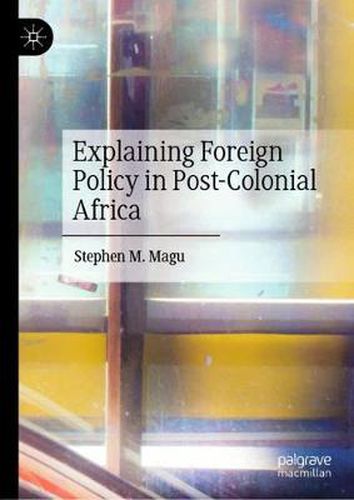
This book explores foreign policy developments in post-colonial Africa. A continental foreign policy is a tenuous proposition, yet new African states emerged out of armed resistance and advocacy from regional allies such as the Bandung Conference and the League of Arab States. Ghana was the first Sub-Saharan African country to gain independence in 1957. Fourteen more countries gained independence in 1960 alone, and by May 1963, when the Organisation of African Unity (OAU) was formed, 30 countries were independent. An early OAU committee was the African Liberation Committee (ALC), tasked to work in the Frontline States (FLS) to support independence in Southern Africa. Pan-Africanists, in alliance with Brazzaville, Casablanca and Monrovia groups, approached continental unity differently, and regionalism continued to be a major feature. Africa’s challenges were often magnified by the capitalist-democratic versus communist-socialist bloc rivalry, but through Africa’s use and leveraging of IGOs - the UN, UNDP, UNECA, GATT, NIEO and others - to advance development, the formation of the African Economic Community, OAU’s evolution into the AU and other alliances belied collective actions, even as Africa implemented decisions that required cooperation: uti possidetis (maintaining colonial borders), containing secession, intra- and inter-state conflicts, rebellions and building RECs and a united Africa as envisioned by Pan Africanists worked better collectively.
$9.00 standard shipping within Australia
FREE standard shipping within Australia for orders over $100.00
Express & International shipping calculated at checkout
Stock availability can be subject to change without notice. We recommend calling the shop or contacting our online team to check availability of low stock items. Please see our Shopping Online page for more details.
This title is printed to order. This book may have been self-published. If so, we cannot guarantee the quality of the content. In the main most books will have gone through the editing process however some may not. We therefore suggest that you be aware of this before ordering this book. If in doubt check either the author or publisher’s details as we are unable to accept any returns unless they are faulty. Please contact us if you have any questions.
This book explores foreign policy developments in post-colonial Africa. A continental foreign policy is a tenuous proposition, yet new African states emerged out of armed resistance and advocacy from regional allies such as the Bandung Conference and the League of Arab States. Ghana was the first Sub-Saharan African country to gain independence in 1957. Fourteen more countries gained independence in 1960 alone, and by May 1963, when the Organisation of African Unity (OAU) was formed, 30 countries were independent. An early OAU committee was the African Liberation Committee (ALC), tasked to work in the Frontline States (FLS) to support independence in Southern Africa. Pan-Africanists, in alliance with Brazzaville, Casablanca and Monrovia groups, approached continental unity differently, and regionalism continued to be a major feature. Africa’s challenges were often magnified by the capitalist-democratic versus communist-socialist bloc rivalry, but through Africa’s use and leveraging of IGOs - the UN, UNDP, UNECA, GATT, NIEO and others - to advance development, the formation of the African Economic Community, OAU’s evolution into the AU and other alliances belied collective actions, even as Africa implemented decisions that required cooperation: uti possidetis (maintaining colonial borders), containing secession, intra- and inter-state conflicts, rebellions and building RECs and a united Africa as envisioned by Pan Africanists worked better collectively.
Search our extensive online catalogue.
