Readings Newsletter
Become a Readings Member to make your shopping experience even easier.
Sign in or sign up for free!
You’re not far away from qualifying for FREE standard shipping within Australia
You’ve qualified for FREE standard shipping within Australia
The cart is loading…


This title is printed to order. This book may have been self-published. If so, we cannot guarantee the quality of the content. In the main most books will have gone through the editing process however some may not. We therefore suggest that you be aware of this before ordering this book. If in doubt check either the author or publisher’s details as we are unable to accept any returns unless they are faulty. Please contact us if you have any questions.
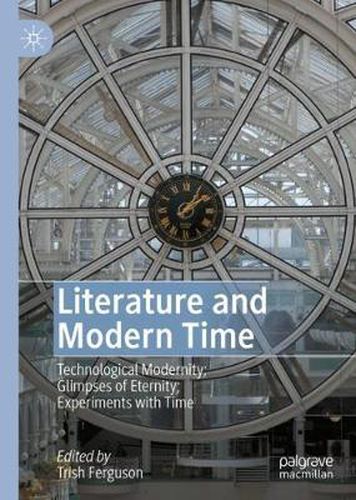
Literature and Modern Time is a collection of essays that explore literature in the context of a wave of challenges to linear conceptions of time introduced by thinkers such as Bergson, Einstein, McTaggart, Freud and Nietzsche. These challenges were not uniform in character. The volume will demonstrate that literature of the era under scrutiny was not simply reacting to new theories of time-in some cases it is actually inspiring and anticipating them. Thus Literature and Modern Time promises to offer a genuine dialogue between literature and time theory and in doing so will uncover and examine influences and connections- sometimes unexpected-between philosophers and writers of the era. It will examine literary attempts to transcend and escape time and also challenge rupture-based accounts of modernist time by demonstrating that literary texts commonly associated with brokenness, decline or stasis, also, at the same time, maintain faith in healing, renewal and mobility.
This collection contains interdisciplinary research of the quite highest kind - to see so many different kinds of time - narrative, historical, mechanical, subjective, non-linear time, myth and nostalgia - as well as time/space discussed here is very stimulating indeed.
Professor Simon James
$9.00 standard shipping within Australia
FREE standard shipping within Australia for orders over $100.00
Express & International shipping calculated at checkout
Stock availability can be subject to change without notice. We recommend calling the shop or contacting our online team to check availability of low stock items. Please see our Shopping Online page for more details.
This title is printed to order. This book may have been self-published. If so, we cannot guarantee the quality of the content. In the main most books will have gone through the editing process however some may not. We therefore suggest that you be aware of this before ordering this book. If in doubt check either the author or publisher’s details as we are unable to accept any returns unless they are faulty. Please contact us if you have any questions.
Literature and Modern Time is a collection of essays that explore literature in the context of a wave of challenges to linear conceptions of time introduced by thinkers such as Bergson, Einstein, McTaggart, Freud and Nietzsche. These challenges were not uniform in character. The volume will demonstrate that literature of the era under scrutiny was not simply reacting to new theories of time-in some cases it is actually inspiring and anticipating them. Thus Literature and Modern Time promises to offer a genuine dialogue between literature and time theory and in doing so will uncover and examine influences and connections- sometimes unexpected-between philosophers and writers of the era. It will examine literary attempts to transcend and escape time and also challenge rupture-based accounts of modernist time by demonstrating that literary texts commonly associated with brokenness, decline or stasis, also, at the same time, maintain faith in healing, renewal and mobility.
This collection contains interdisciplinary research of the quite highest kind - to see so many different kinds of time - narrative, historical, mechanical, subjective, non-linear time, myth and nostalgia - as well as time/space discussed here is very stimulating indeed.
Professor Simon James
Search our extensive online catalogue.
