Readings Newsletter
Become a Readings Member to make your shopping experience even easier.
Sign in or sign up for free!
You’re not far away from qualifying for FREE standard shipping within Australia
You’ve qualified for FREE standard shipping within Australia
The cart is loading…


This title is printed to order. This book may have been self-published. If so, we cannot guarantee the quality of the content. In the main most books will have gone through the editing process however some may not. We therefore suggest that you be aware of this before ordering this book. If in doubt check either the author or publisher’s details as we are unable to accept any returns unless they are faulty. Please contact us if you have any questions.
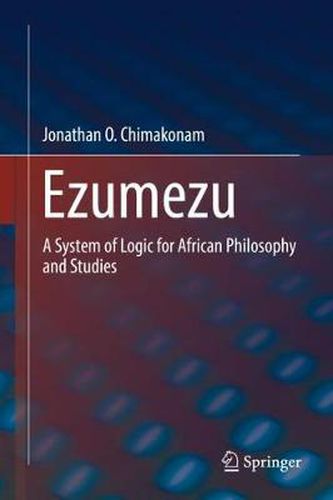
The issue of a logic foundation for African thought connects well with the question of method. Do we need new methods for African philosophy and studies? Or, are the methods of Western thought adequate for African intellectual space? These questions are not some of the easiest to answer because they lead straight to the question of whether or not a logic tradition from African intellectual space is possible. Thus in charting the course of future direction in African philosophy and studies, one must be confronted with this question of logic. The author boldly takes up this challenge and becomes the first to do so in a book by introducing new concepts and formulating a new African culture-inspired system of logic called Ezumezu which he believes would ground new methods in African philosophy and studies. He develops this system to rescue African philosophy and, by extension, sundry fields in African Indigenous Knowledge Systems from the spell of Plato and the hegemony of Aristotle. African philosophers can now ground their discourses in Ezumezu logic which will distinguish their philosophy as a tradition in its own right. On the whole, the book engages with some of the lingering controversies in the idea of (an) African logic before unveiling Ezumezu as a philosophy of logic, methodology and formal system. The book also provides fresh arguments and insights on the themes of decolonisation and Africanisation for the intellectual transformation of scholarship in Africa. It will appeal to philosophers and logicians-undergraduates and post graduate researchers-as well as those in various areas of African studies.
$9.00 standard shipping within Australia
FREE standard shipping within Australia for orders over $100.00
Express & International shipping calculated at checkout
Stock availability can be subject to change without notice. We recommend calling the shop or contacting our online team to check availability of low stock items. Please see our Shopping Online page for more details.
This title is printed to order. This book may have been self-published. If so, we cannot guarantee the quality of the content. In the main most books will have gone through the editing process however some may not. We therefore suggest that you be aware of this before ordering this book. If in doubt check either the author or publisher’s details as we are unable to accept any returns unless they are faulty. Please contact us if you have any questions.
The issue of a logic foundation for African thought connects well with the question of method. Do we need new methods for African philosophy and studies? Or, are the methods of Western thought adequate for African intellectual space? These questions are not some of the easiest to answer because they lead straight to the question of whether or not a logic tradition from African intellectual space is possible. Thus in charting the course of future direction in African philosophy and studies, one must be confronted with this question of logic. The author boldly takes up this challenge and becomes the first to do so in a book by introducing new concepts and formulating a new African culture-inspired system of logic called Ezumezu which he believes would ground new methods in African philosophy and studies. He develops this system to rescue African philosophy and, by extension, sundry fields in African Indigenous Knowledge Systems from the spell of Plato and the hegemony of Aristotle. African philosophers can now ground their discourses in Ezumezu logic which will distinguish their philosophy as a tradition in its own right. On the whole, the book engages with some of the lingering controversies in the idea of (an) African logic before unveiling Ezumezu as a philosophy of logic, methodology and formal system. The book also provides fresh arguments and insights on the themes of decolonisation and Africanisation for the intellectual transformation of scholarship in Africa. It will appeal to philosophers and logicians-undergraduates and post graduate researchers-as well as those in various areas of African studies.
Search our extensive online catalogue.
