Readings Newsletter
Become a Readings Member to make your shopping experience even easier.
Sign in or sign up for free!
You’re not far away from qualifying for FREE standard shipping within Australia
You’ve qualified for FREE standard shipping within Australia
The cart is loading…


This title is printed to order. This book may have been self-published. If so, we cannot guarantee the quality of the content. In the main most books will have gone through the editing process however some may not. We therefore suggest that you be aware of this before ordering this book. If in doubt check either the author or publisher’s details as we are unable to accept any returns unless they are faulty. Please contact us if you have any questions.
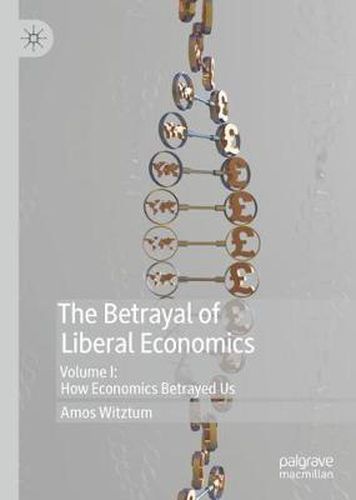
The presumed sovereignty of individuals and the facilitating powers of the markets have generated a universal and ethically neutral conception of both social and economic organisation. This ground-breaking text re-examines the purpose of society and the role of economics in it, arguing that the absence of a beneficial natural order calls for the role of the collective in social and economic life to be revisited. Drawing on some key figures marking milestones in the evolution of social and economic thinking, the author offers a critique of mainstream economics as a way of thinking and as a provider of guiding principles for economic and social organisation.
Volume I introduces the reader to the emergence of natural order; considers the internal logic of economics and how it managed to be so persuasive in its recommendation for competitive interactions to govern all aspects of social life in all societies and across them; demonstrates that the economic conception of an order which solves society’s economic problem is, in fact, an impossibility that turns the natural phenomenon of markets into a problem rather than an ideal; and, addresses the other apparent appeal of markets: their association with the ideas of freedom and justice. This is a bold and foundational new work that offers an original and innovative perspective on economics and its challenges, addressing core areas such as behavioural economics, evolutionary game theory and links between social sciences (anthropology, philosophy) and neurosciences.
$9.00 standard shipping within Australia
FREE standard shipping within Australia for orders over $100.00
Express & International shipping calculated at checkout
Stock availability can be subject to change without notice. We recommend calling the shop or contacting our online team to check availability of low stock items. Please see our Shopping Online page for more details.
This title is printed to order. This book may have been self-published. If so, we cannot guarantee the quality of the content. In the main most books will have gone through the editing process however some may not. We therefore suggest that you be aware of this before ordering this book. If in doubt check either the author or publisher’s details as we are unable to accept any returns unless they are faulty. Please contact us if you have any questions.
The presumed sovereignty of individuals and the facilitating powers of the markets have generated a universal and ethically neutral conception of both social and economic organisation. This ground-breaking text re-examines the purpose of society and the role of economics in it, arguing that the absence of a beneficial natural order calls for the role of the collective in social and economic life to be revisited. Drawing on some key figures marking milestones in the evolution of social and economic thinking, the author offers a critique of mainstream economics as a way of thinking and as a provider of guiding principles for economic and social organisation.
Volume I introduces the reader to the emergence of natural order; considers the internal logic of economics and how it managed to be so persuasive in its recommendation for competitive interactions to govern all aspects of social life in all societies and across them; demonstrates that the economic conception of an order which solves society’s economic problem is, in fact, an impossibility that turns the natural phenomenon of markets into a problem rather than an ideal; and, addresses the other apparent appeal of markets: their association with the ideas of freedom and justice. This is a bold and foundational new work that offers an original and innovative perspective on economics and its challenges, addressing core areas such as behavioural economics, evolutionary game theory and links between social sciences (anthropology, philosophy) and neurosciences.
Search our extensive online catalogue.
