Readings Newsletter
Become a Readings Member to make your shopping experience even easier.
Sign in or sign up for free!
You’re not far away from qualifying for FREE standard shipping within Australia
You’ve qualified for FREE standard shipping within Australia
The cart is loading…


This title is printed to order. This book may have been self-published. If so, we cannot guarantee the quality of the content. In the main most books will have gone through the editing process however some may not. We therefore suggest that you be aware of this before ordering this book. If in doubt check either the author or publisher’s details as we are unable to accept any returns unless they are faulty. Please contact us if you have any questions.
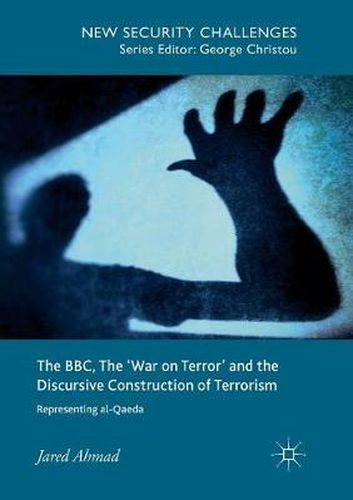
In the years since the September 11th 2001 attacks, the al-Qaeda phenomenon has become one of the most written about, yet crucially misunderstood, threats of the 21st century. But despite the sheer volume of literature produced during the ‘war on terror’ period, few studies have sought to consider the way this entity has been represented within the news media. The BBC, the War on Terror and the Discursive Construction of Al-Qaeda addresses this significant gap in knowledge by providing an original and much needed assessment of the various strategies used to depict ‘al-Qaeda’, and thus make it meaningful for British television audiences. Drawing on the work of French philosopher Michel Foucault, and focusing on Britain’s most watched and trusted news programme, the BBC’s flagship ‘News at Ten’ bulletin, the book provides insight into both the visual and verbal nature of these representations and the way they have shifted over the course of a ten-year period, while also shedding light upon the broader political and social consequences of the BBC’s portrayals. In doing so, the book not only helps to develop a deeper understanding of the complexity of the BBC’s representations, and their various shifts and transformations, but also details the process through which ‘al-Qaeda’ has been pieced together from a range of cultural parts. And how, ultimately, the dominant mode of representation used to portray this entity is one that closely resembles Britain’s own, diverse multicultural ‘self’.
$9.00 standard shipping within Australia
FREE standard shipping within Australia for orders over $100.00
Express & International shipping calculated at checkout
Stock availability can be subject to change without notice. We recommend calling the shop or contacting our online team to check availability of low stock items. Please see our Shopping Online page for more details.
This title is printed to order. This book may have been self-published. If so, we cannot guarantee the quality of the content. In the main most books will have gone through the editing process however some may not. We therefore suggest that you be aware of this before ordering this book. If in doubt check either the author or publisher’s details as we are unable to accept any returns unless they are faulty. Please contact us if you have any questions.
In the years since the September 11th 2001 attacks, the al-Qaeda phenomenon has become one of the most written about, yet crucially misunderstood, threats of the 21st century. But despite the sheer volume of literature produced during the ‘war on terror’ period, few studies have sought to consider the way this entity has been represented within the news media. The BBC, the War on Terror and the Discursive Construction of Al-Qaeda addresses this significant gap in knowledge by providing an original and much needed assessment of the various strategies used to depict ‘al-Qaeda’, and thus make it meaningful for British television audiences. Drawing on the work of French philosopher Michel Foucault, and focusing on Britain’s most watched and trusted news programme, the BBC’s flagship ‘News at Ten’ bulletin, the book provides insight into both the visual and verbal nature of these representations and the way they have shifted over the course of a ten-year period, while also shedding light upon the broader political and social consequences of the BBC’s portrayals. In doing so, the book not only helps to develop a deeper understanding of the complexity of the BBC’s representations, and their various shifts and transformations, but also details the process through which ‘al-Qaeda’ has been pieced together from a range of cultural parts. And how, ultimately, the dominant mode of representation used to portray this entity is one that closely resembles Britain’s own, diverse multicultural ‘self’.
Search our extensive online catalogue.
