Readings Newsletter
Become a Readings Member to make your shopping experience even easier.
Sign in or sign up for free!
You’re not far away from qualifying for FREE standard shipping within Australia
You’ve qualified for FREE standard shipping within Australia
The cart is loading…


This title is printed to order. This book may have been self-published. If so, we cannot guarantee the quality of the content. In the main most books will have gone through the editing process however some may not. We therefore suggest that you be aware of this before ordering this book. If in doubt check either the author or publisher’s details as we are unable to accept any returns unless they are faulty. Please contact us if you have any questions.
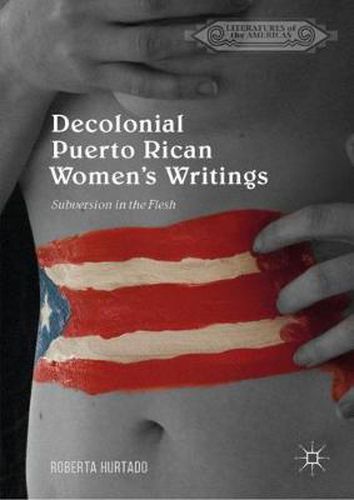
This book explores representations of sentient-flesh - flesh that holds consciousness of being - in Puerto Rican women’s literature. It considers how different literary devices can participate in the decolonization of the flesh as it is obfuscated by mappings of the ‘body’ from the Enlightenment era and colonial endeavors. Drawing on studies of cognitive development and epigenetics to identify how sentient-flesh creates knowledge of power and navigates methods of subversion for social justice, this book grapples with the question of how Puerto Rican women, living in the nation of their colonizer, manifest an identity that exists beyond the scope of colonization. It makes the case for a change in perspective that illustrates the conceptual shift from survivors to thrivers to educators. To do so, it draws upon Cherrie Moraga and Gloria Anzaldua’s theory in the flesh; Iris Lopez’s theories of trauma-knowledge; and Maria Lugones’s concept of ‘world travelers’ to retain the corporeal flesh and physical location in Latinas’ attempts to write subversion under U.S. colonization across racial, cultural, and ethnic boundaries, as well as the gendered-sexuality barriers identified by Emma Perez. This project builds on their work to frame Latina literature within a new discussion of how corporeal, memory, and sentient experiences of identity must center sentient-flesh as the source of decolonial consciousness rather than relapsing into discourses of the ‘body’.
$9.00 standard shipping within Australia
FREE standard shipping within Australia for orders over $100.00
Express & International shipping calculated at checkout
Stock availability can be subject to change without notice. We recommend calling the shop or contacting our online team to check availability of low stock items. Please see our Shopping Online page for more details.
This title is printed to order. This book may have been self-published. If so, we cannot guarantee the quality of the content. In the main most books will have gone through the editing process however some may not. We therefore suggest that you be aware of this before ordering this book. If in doubt check either the author or publisher’s details as we are unable to accept any returns unless they are faulty. Please contact us if you have any questions.
This book explores representations of sentient-flesh - flesh that holds consciousness of being - in Puerto Rican women’s literature. It considers how different literary devices can participate in the decolonization of the flesh as it is obfuscated by mappings of the ‘body’ from the Enlightenment era and colonial endeavors. Drawing on studies of cognitive development and epigenetics to identify how sentient-flesh creates knowledge of power and navigates methods of subversion for social justice, this book grapples with the question of how Puerto Rican women, living in the nation of their colonizer, manifest an identity that exists beyond the scope of colonization. It makes the case for a change in perspective that illustrates the conceptual shift from survivors to thrivers to educators. To do so, it draws upon Cherrie Moraga and Gloria Anzaldua’s theory in the flesh; Iris Lopez’s theories of trauma-knowledge; and Maria Lugones’s concept of ‘world travelers’ to retain the corporeal flesh and physical location in Latinas’ attempts to write subversion under U.S. colonization across racial, cultural, and ethnic boundaries, as well as the gendered-sexuality barriers identified by Emma Perez. This project builds on their work to frame Latina literature within a new discussion of how corporeal, memory, and sentient experiences of identity must center sentient-flesh as the source of decolonial consciousness rather than relapsing into discourses of the ‘body’.
Search our extensive online catalogue.
