Readings Newsletter
Become a Readings Member to make your shopping experience even easier.
Sign in or sign up for free!
You’re not far away from qualifying for FREE standard shipping within Australia
You’ve qualified for FREE standard shipping within Australia
The cart is loading…


This title is printed to order. This book may have been self-published. If so, we cannot guarantee the quality of the content. In the main most books will have gone through the editing process however some may not. We therefore suggest that you be aware of this before ordering this book. If in doubt check either the author or publisher’s details as we are unable to accept any returns unless they are faulty. Please contact us if you have any questions.
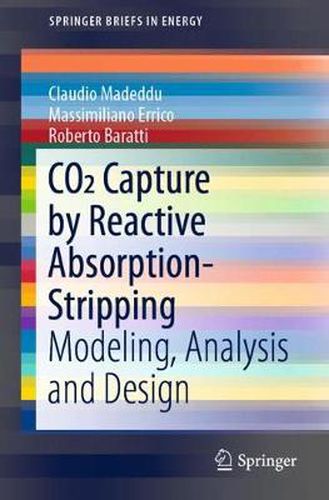
This book focuses on modelling issues and their implications for the correct design of reactive absorption-desorption systems. In addition, it addresses the case of carbon dioxide (CO2) post-combustion capture in detail. The book proposes a new perspective on these systems, and provides technological solutions with comparisons to previous treatments of the subject. The model that is proposed is subsequently validated using experimental data. In addition, the book features graphs to guide readers with immediate visualizations of the benefits of the methodology proposed. It shows a systematic procedure for the steady-state model-based design of a CO2 post-combustion capture plant that employs reactive absorption-stripping, using monoethanolamine as the solvent. It also discusses the minimization of energy consumption, both through the modification of the plant flowsheet and the set-up of the operating parameters.
The book offers a unique source of information for researchers and practitioners alike, as it also includes an economic analysis of the complete plant. Further, it will be of interest to all academics and students whose work involves reactive absorption-stripping design and the modelling of reactive absorption-stripping systems.
$9.00 standard shipping within Australia
FREE standard shipping within Australia for orders over $100.00
Express & International shipping calculated at checkout
Stock availability can be subject to change without notice. We recommend calling the shop or contacting our online team to check availability of low stock items. Please see our Shopping Online page for more details.
This title is printed to order. This book may have been self-published. If so, we cannot guarantee the quality of the content. In the main most books will have gone through the editing process however some may not. We therefore suggest that you be aware of this before ordering this book. If in doubt check either the author or publisher’s details as we are unable to accept any returns unless they are faulty. Please contact us if you have any questions.
This book focuses on modelling issues and their implications for the correct design of reactive absorption-desorption systems. In addition, it addresses the case of carbon dioxide (CO2) post-combustion capture in detail. The book proposes a new perspective on these systems, and provides technological solutions with comparisons to previous treatments of the subject. The model that is proposed is subsequently validated using experimental data. In addition, the book features graphs to guide readers with immediate visualizations of the benefits of the methodology proposed. It shows a systematic procedure for the steady-state model-based design of a CO2 post-combustion capture plant that employs reactive absorption-stripping, using monoethanolamine as the solvent. It also discusses the minimization of energy consumption, both through the modification of the plant flowsheet and the set-up of the operating parameters.
The book offers a unique source of information for researchers and practitioners alike, as it also includes an economic analysis of the complete plant. Further, it will be of interest to all academics and students whose work involves reactive absorption-stripping design and the modelling of reactive absorption-stripping systems.
Search our extensive online catalogue.
