Readings Newsletter
Become a Readings Member to make your shopping experience even easier.
Sign in or sign up for free!
You’re not far away from qualifying for FREE standard shipping within Australia
You’ve qualified for FREE standard shipping within Australia
The cart is loading…


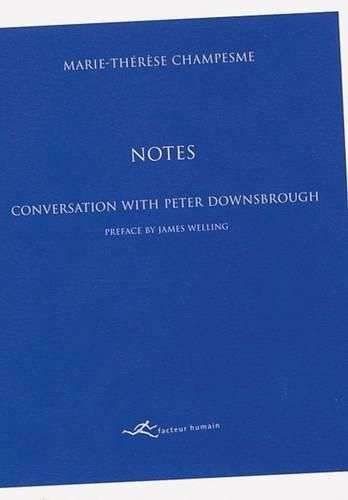
In this book-length conversation between art historian and independent curator Marie-Therese Champesme and the Brussels-based conceptualist known for his challenging photography, sculpture and installed works, topics range from Downsbrough’s early and ideal future artworks, interracial dating during the civil rights era, building a house in New Hampshire, the 1970s Belgian art scene and more. Los Angeles conceptual photographer James Welling’s introduction captures the spirit: Downsbrough’s work is catalytic. It changes the place surrounding it, while the objects remain stable, unchanged. The 1960s were a revolutionary time for sculpture. When I look at Peter Downsbrough’s new work today, I am reminded of the openness found in sculpture from that era. For some time, I’ve been of the opinion that sculpture encompasses all the other genres of art making. Said differently: Almost anything could be sculpture.
$9.00 standard shipping within Australia
FREE standard shipping within Australia for orders over $100.00
Express & International shipping calculated at checkout
Stock availability can be subject to change without notice. We recommend calling the shop or contacting our online team to check availability of low stock items. Please see our Shopping Online page for more details.
In this book-length conversation between art historian and independent curator Marie-Therese Champesme and the Brussels-based conceptualist known for his challenging photography, sculpture and installed works, topics range from Downsbrough’s early and ideal future artworks, interracial dating during the civil rights era, building a house in New Hampshire, the 1970s Belgian art scene and more. Los Angeles conceptual photographer James Welling’s introduction captures the spirit: Downsbrough’s work is catalytic. It changes the place surrounding it, while the objects remain stable, unchanged. The 1960s were a revolutionary time for sculpture. When I look at Peter Downsbrough’s new work today, I am reminded of the openness found in sculpture from that era. For some time, I’ve been of the opinion that sculpture encompasses all the other genres of art making. Said differently: Almost anything could be sculpture.
Search our extensive online catalogue.
