Readings Newsletter
Become a Readings Member to make your shopping experience even easier.
Sign in or sign up for free!
You’re not far away from qualifying for FREE standard shipping within Australia
You’ve qualified for FREE standard shipping within Australia
The cart is loading…


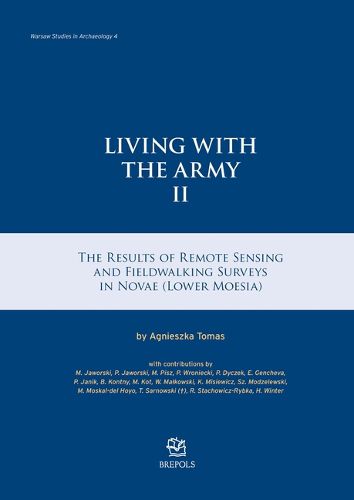
This book presents the results of a research project realised in 2012-14 in the surroundings of the Roman legionary base at Novae (Moesia inferior), transformed in late Antiquity into a civilian town. The publication also contains material from surveys conducted in 1977 and in 2000, which have so far only been partly published. Various research methods were implemented jointly to enable at least a partial reconstruction of the settlement's character. These included geophysical prospection, field walking, and the mapping of metal finds, supplemented by a series of analyses, such as the testing of plant pollen and macroremains, with the aim of providing as complete a reconstruction as possible of the past environment in the fortress' surroundings. We attempted to record both the finds originating from earlier epochs and those from later ones, in order to provide a more complete reconstruction of the settlement landscape and the character of the site.
$9.00 standard shipping within Australia
FREE standard shipping within Australia for orders over $100.00
Express & International shipping calculated at checkout
Stock availability can be subject to change without notice. We recommend calling the shop or contacting our online team to check availability of low stock items. Please see our Shopping Online page for more details.
This book presents the results of a research project realised in 2012-14 in the surroundings of the Roman legionary base at Novae (Moesia inferior), transformed in late Antiquity into a civilian town. The publication also contains material from surveys conducted in 1977 and in 2000, which have so far only been partly published. Various research methods were implemented jointly to enable at least a partial reconstruction of the settlement's character. These included geophysical prospection, field walking, and the mapping of metal finds, supplemented by a series of analyses, such as the testing of plant pollen and macroremains, with the aim of providing as complete a reconstruction as possible of the past environment in the fortress' surroundings. We attempted to record both the finds originating from earlier epochs and those from later ones, in order to provide a more complete reconstruction of the settlement landscape and the character of the site.
Search our extensive online catalogue.
