Readings Newsletter
Become a Readings Member to make your shopping experience even easier.
Sign in or sign up for free!
You’re not far away from qualifying for FREE standard shipping within Australia
You’ve qualified for FREE standard shipping within Australia
The cart is loading…


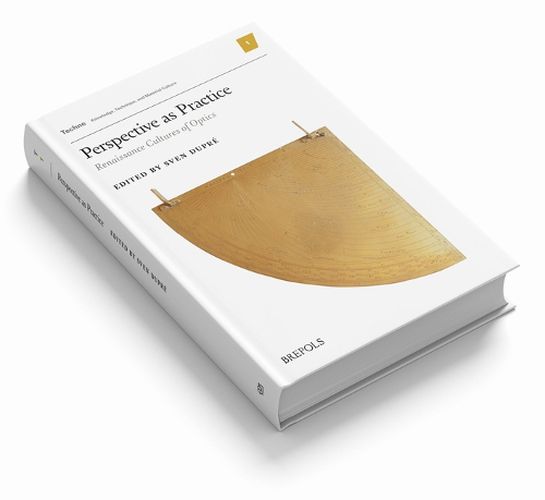
This book is about the development of optics and perspective between the fifteenth and seventeenth centuries. The point of departure of this book is the recognition of the polysemy of perspective, that is, the plurality of meanings of perspective. To bring forward the polysemy of perspective, this book explores the history of perspectiva in terms of practices, a conglomerate of material, social, literary and reproductive practices, through which knowledge claims in perspective were produced, promoted, legitimated and circulated in and through a variety of sites and institutions. The ways optical knowledge was used by different groups in different places (such as the university classroom, the anatomist’s dissection table, the goldsmith’s workshop, and the astronomer’s observatory) defined the meanings of Renaissance perspective. As this period was characterized by widespread ‘optical literacy’, perspective was defined in different ways in different places and sites by various groups of practitioners. Most interestingly, sites such as the theatre, the instrument maker’s workshop and the courtly garden were home to practices of perspective which have remained on the margin, or even completely invisible, in the historiographies of optics and perspective. The book also brings out the differences between codifications of perspectiva and practice. There were a variety of non-Albertian constructions to create the illusion of space, and other types of optical knowledge were as important to artists as the geometry of perspective.
$9.00 standard shipping within Australia
FREE standard shipping within Australia for orders over $100.00
Express & International shipping calculated at checkout
Stock availability can be subject to change without notice. We recommend calling the shop or contacting our online team to check availability of low stock items. Please see our Shopping Online page for more details.
This book is about the development of optics and perspective between the fifteenth and seventeenth centuries. The point of departure of this book is the recognition of the polysemy of perspective, that is, the plurality of meanings of perspective. To bring forward the polysemy of perspective, this book explores the history of perspectiva in terms of practices, a conglomerate of material, social, literary and reproductive practices, through which knowledge claims in perspective were produced, promoted, legitimated and circulated in and through a variety of sites and institutions. The ways optical knowledge was used by different groups in different places (such as the university classroom, the anatomist’s dissection table, the goldsmith’s workshop, and the astronomer’s observatory) defined the meanings of Renaissance perspective. As this period was characterized by widespread ‘optical literacy’, perspective was defined in different ways in different places and sites by various groups of practitioners. Most interestingly, sites such as the theatre, the instrument maker’s workshop and the courtly garden were home to practices of perspective which have remained on the margin, or even completely invisible, in the historiographies of optics and perspective. The book also brings out the differences between codifications of perspectiva and practice. There were a variety of non-Albertian constructions to create the illusion of space, and other types of optical knowledge were as important to artists as the geometry of perspective.
Search our extensive online catalogue.
