Readings Newsletter
Become a Readings Member to make your shopping experience even easier.
Sign in or sign up for free!
You’re not far away from qualifying for FREE standard shipping within Australia
You’ve qualified for FREE standard shipping within Australia
The cart is loading…


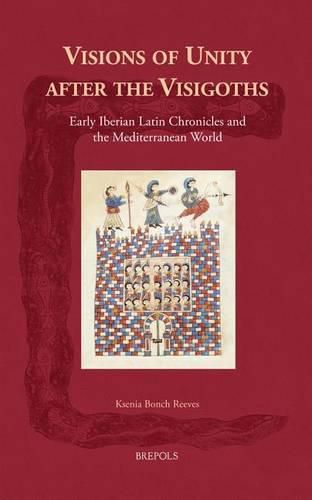
This study focuses on post-Visigothic Latin chronicles as testimonies of an intense search for models of stability and social cohesion on the Iberian Peninsula. As the principal source of Iberian political thought between the eighth and mid-thirteenth centuries, these texts have long been regarded from the perspective of modern-day national boundaries of a political entity called Spain. From the post-national perspective of Mediterranean studies, which considers Iberian centres of power in cultural contact with the broader world, post-Visigothic Iberian chronicle writing is seen as a cultural practice that seeks to reconcile the imperative of unity and stability with the reality of diversity and social change. The book examines, firstly, the Andalusi Christian narrative of Visigothic political demise, which originated in Iberian dhimm? communities between the mid-eighth and mid-ninth centuries. Second, it explores the narrative of sovereignty, developed in Asturias-Leon from the late ninth century onwards. Finally, it examines the historiographical manipulation of both of these traditions in Rodrigo Jimenez de Rada’s Historia de rebus Hispanie (1243). The ongoing contact between Iberian Latin textual communities and the broader Mediterranean is interpreted as central to both the development of Iberian historical mythology and its historiographical renovation.
$9.00 standard shipping within Australia
FREE standard shipping within Australia for orders over $100.00
Express & International shipping calculated at checkout
Stock availability can be subject to change without notice. We recommend calling the shop or contacting our online team to check availability of low stock items. Please see our Shopping Online page for more details.
This study focuses on post-Visigothic Latin chronicles as testimonies of an intense search for models of stability and social cohesion on the Iberian Peninsula. As the principal source of Iberian political thought between the eighth and mid-thirteenth centuries, these texts have long been regarded from the perspective of modern-day national boundaries of a political entity called Spain. From the post-national perspective of Mediterranean studies, which considers Iberian centres of power in cultural contact with the broader world, post-Visigothic Iberian chronicle writing is seen as a cultural practice that seeks to reconcile the imperative of unity and stability with the reality of diversity and social change. The book examines, firstly, the Andalusi Christian narrative of Visigothic political demise, which originated in Iberian dhimm? communities between the mid-eighth and mid-ninth centuries. Second, it explores the narrative of sovereignty, developed in Asturias-Leon from the late ninth century onwards. Finally, it examines the historiographical manipulation of both of these traditions in Rodrigo Jimenez de Rada’s Historia de rebus Hispanie (1243). The ongoing contact between Iberian Latin textual communities and the broader Mediterranean is interpreted as central to both the development of Iberian historical mythology and its historiographical renovation.
Search our extensive online catalogue.
