Readings Newsletter
Become a Readings Member to make your shopping experience even easier.
Sign in or sign up for free!
You’re not far away from qualifying for FREE standard shipping within Australia
You’ve qualified for FREE standard shipping within Australia
The cart is loading…


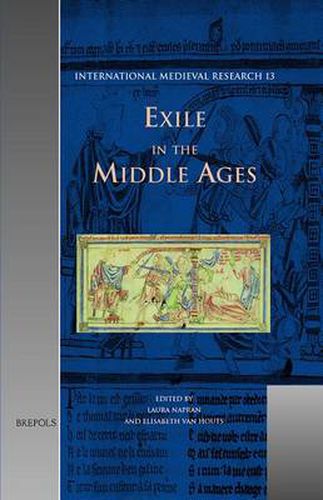
Exile in the Middle Ages took many different forms. As a literary theme it has received much scholarly attention in the Latin, Greek and vernacular traditions. The historical and legal phenomenon of exile is relatively unexplored territory. In the secular world, it usually meant banishment of a person by a higher authority for political reasons, resulting in the exile leaving home for a shorter or longer period. Sometimes an exile did not wait to be expelled but left of his or her own accord. Leaving home to go on pilgrimage, or, in the case of women to marry could be experienced as a form of exile. In the ecclesiastical sphere, two forms of exile stand out. Monasticism was often seen as a form of spiritual (permanent) exile from the secular world. Excommunication was a punishment exercised by the Church authorities in order to eject persons (often only temporarily) from the community of Christians. Banishment as a form of social punishment is therefore the central theme of this volume on Exile in the Middle Ages. The book covers the period of the central Middle Ages from ca. 900 to ca. 1300 in Western Europe, though some chapters have a wider remit. The genesis of the volume was a series of presentations delivered at the Leeds International Medieval Congress in 2002, which was devoted to the theme of Exile.
$9.00 standard shipping within Australia
FREE standard shipping within Australia for orders over $100.00
Express & International shipping calculated at checkout
Stock availability can be subject to change without notice. We recommend calling the shop or contacting our online team to check availability of low stock items. Please see our Shopping Online page for more details.
Exile in the Middle Ages took many different forms. As a literary theme it has received much scholarly attention in the Latin, Greek and vernacular traditions. The historical and legal phenomenon of exile is relatively unexplored territory. In the secular world, it usually meant banishment of a person by a higher authority for political reasons, resulting in the exile leaving home for a shorter or longer period. Sometimes an exile did not wait to be expelled but left of his or her own accord. Leaving home to go on pilgrimage, or, in the case of women to marry could be experienced as a form of exile. In the ecclesiastical sphere, two forms of exile stand out. Monasticism was often seen as a form of spiritual (permanent) exile from the secular world. Excommunication was a punishment exercised by the Church authorities in order to eject persons (often only temporarily) from the community of Christians. Banishment as a form of social punishment is therefore the central theme of this volume on Exile in the Middle Ages. The book covers the period of the central Middle Ages from ca. 900 to ca. 1300 in Western Europe, though some chapters have a wider remit. The genesis of the volume was a series of presentations delivered at the Leeds International Medieval Congress in 2002, which was devoted to the theme of Exile.
Search our extensive online catalogue.
