Readings Newsletter
Become a Readings Member to make your shopping experience even easier.
Sign in or sign up for free!
You’re not far away from qualifying for FREE standard shipping within Australia
You’ve qualified for FREE standard shipping within Australia
The cart is loading…


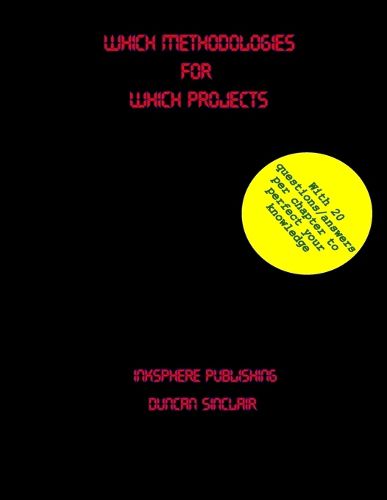
Which Methodologies for Which Projects? Choosing the right way to deliver in complex IT environments By Duncan Sinclair
Most IT projects don't fail because of bad people or bad tools. They fail because the wrong methodology was applied to the wrong context.
Cloud migrations, ERP rollouts, data platforms, AI pilots, cybersecurity programmes, multi-country deployments... each type of project comes with its own mix of risk, uncertainty, regulation, and organisational politics. Asking "Agile or Waterfall?" is no longer enough.
This book helps you ask a much better question:
"For this project, in this organisation, what is the smartest way to deliver?"
What this book will help you doInstead of selling a single "universal" framework, Which Methodologies for Which Projects? gives you a practical decision-making toolkit to match delivery methods to real project situations.
Inside, you will:
Understand the true strengths and limits of the main approaches: Waterfall, Scrum, Kanban, Hybrid models, Lean, Six Sigma, DevOps and scaled Agile.
Learn how to analyse your project context: risk, uncertainty, dependencies, compliance, suppliers, team maturity, geography, and politics.
Use a Methodology Selection Matrix to compare options and justify your choice to sponsors, PMO and auditors.
See how different methodologies behave on real projects: ERP & finance systems, cloud migration, data/BI programmes, integration projects, regulated environments, and multi-vendor landscapes.
Combine and tailor methods in hybrid setups that actually work in large organisations (instead of "textbook Agile" that collapses after the first steering committee).
Reuse concrete tools and templates: - comparison tables - decision grids - governance patterns - examples of how to present methodology choices in slides and reports.
Who is this book for?This book is written for professionals who live in the real world of constraints, legacy systems, and conflicting stakeholders:
IT Project and Programme Managers
PMO leaders and analysts
Product Owners, Scrum Masters, Agile Coaches
Enterprise and Solution Architects
CIOs, IT Directors and transformation leaders
Whether you work in a global corporation, a mid-sized company, or a complex multi-supplier environment, this book will help you turn methodologies from ideology into a strategic lever for project success.
About the authorDuncan Sinclair is an experienced IT project and programme practitioner who has worked across ERP, finance, infrastructure, data, and integration projects in multinational environments. Drawing on years of hands-on delivery rather than theory alone, he offers a pragmatic, de-buzzworded view of methodologies-and how they really behave under pressure.
Make your next project work by design, not by luck.
$9.00 standard shipping within Australia
FREE standard shipping within Australia for orders over $100.00
Express & International shipping calculated at checkout
Stock availability can be subject to change without notice. We recommend calling the shop or contacting our online team to check availability of low stock items. Please see our Shopping Online page for more details.
Which Methodologies for Which Projects? Choosing the right way to deliver in complex IT environments By Duncan Sinclair
Most IT projects don't fail because of bad people or bad tools. They fail because the wrong methodology was applied to the wrong context.
Cloud migrations, ERP rollouts, data platforms, AI pilots, cybersecurity programmes, multi-country deployments... each type of project comes with its own mix of risk, uncertainty, regulation, and organisational politics. Asking "Agile or Waterfall?" is no longer enough.
This book helps you ask a much better question:
"For this project, in this organisation, what is the smartest way to deliver?"
What this book will help you doInstead of selling a single "universal" framework, Which Methodologies for Which Projects? gives you a practical decision-making toolkit to match delivery methods to real project situations.
Inside, you will:
Understand the true strengths and limits of the main approaches: Waterfall, Scrum, Kanban, Hybrid models, Lean, Six Sigma, DevOps and scaled Agile.
Learn how to analyse your project context: risk, uncertainty, dependencies, compliance, suppliers, team maturity, geography, and politics.
Use a Methodology Selection Matrix to compare options and justify your choice to sponsors, PMO and auditors.
See how different methodologies behave on real projects: ERP & finance systems, cloud migration, data/BI programmes, integration projects, regulated environments, and multi-vendor landscapes.
Combine and tailor methods in hybrid setups that actually work in large organisations (instead of "textbook Agile" that collapses after the first steering committee).
Reuse concrete tools and templates: - comparison tables - decision grids - governance patterns - examples of how to present methodology choices in slides and reports.
Who is this book for?This book is written for professionals who live in the real world of constraints, legacy systems, and conflicting stakeholders:
IT Project and Programme Managers
PMO leaders and analysts
Product Owners, Scrum Masters, Agile Coaches
Enterprise and Solution Architects
CIOs, IT Directors and transformation leaders
Whether you work in a global corporation, a mid-sized company, or a complex multi-supplier environment, this book will help you turn methodologies from ideology into a strategic lever for project success.
About the authorDuncan Sinclair is an experienced IT project and programme practitioner who has worked across ERP, finance, infrastructure, data, and integration projects in multinational environments. Drawing on years of hands-on delivery rather than theory alone, he offers a pragmatic, de-buzzworded view of methodologies-and how they really behave under pressure.
Make your next project work by design, not by luck.
Search our extensive online catalogue.
