Readings Newsletter
Become a Readings Member to make your shopping experience even easier.
Sign in or sign up for free!
You’re not far away from qualifying for FREE standard shipping within Australia
You’ve qualified for FREE standard shipping within Australia
The cart is loading…


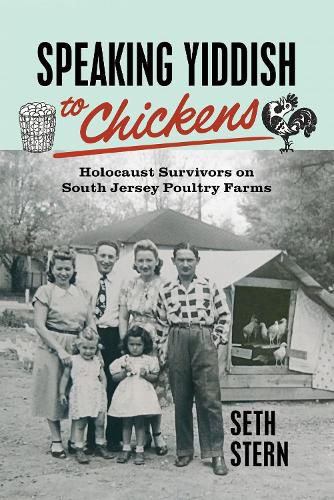
Most of the roughly 140,000 Holocaust survivors who came to the United States in the first decade after World War II settled in big cities such as New York. But a few thousand chose an alternative way of life on American farms. More of these accidental farmers wound up raising chickens in southern New Jersey than anywhere else. Speaking Yiddish to Chickens is the first book to chronicle this little-known chapter in American Jewish history when these mostly Eastern European refugees - including the author’s grandparents - found an unlikely refuge and gateway to new lives in the US on poultry farms. They gravitated to a section of south Jersey anchored by Vineland, a small rural city where previous waves of Jewish immigrants had built a rich network of cultural and religious institutions.
This book relies on interviews with dozens of these refugee farmers and their children, as well as oral histories and archival records to tell how they learned to farm while coping with unimaginable grief. They built small synagogues within walking distance of their farms and hosted Yiddish cultural events more frequently found on the Lower East Side than perhaps anywhere else in rural America at the time. Like refugees today, they embraced their new American identities and enriched the community where they settled, working hard in unfamiliar jobs for often meager returns. Within a decade, falling egg prices and the rise of industrial-scale agriculture in the South would drive almost all of these novice poultry farmers out of business, many into bankruptcy. Some hated every minute here; others would remember their time on south Jersey farms as their best years in America. They enjoyed a quieter way of life and more space for themselves and their children than in the crowded New York City apartments where so many displaced persons settled. This is their remarkable story of loss, renewal, and perseverance in the most unexpected of settings.
$9.00 standard shipping within Australia
FREE standard shipping within Australia for orders over $100.00
Express & International shipping calculated at checkout
Stock availability can be subject to change without notice. We recommend calling the shop or contacting our online team to check availability of low stock items. Please see our Shopping Online page for more details.
Most of the roughly 140,000 Holocaust survivors who came to the United States in the first decade after World War II settled in big cities such as New York. But a few thousand chose an alternative way of life on American farms. More of these accidental farmers wound up raising chickens in southern New Jersey than anywhere else. Speaking Yiddish to Chickens is the first book to chronicle this little-known chapter in American Jewish history when these mostly Eastern European refugees - including the author’s grandparents - found an unlikely refuge and gateway to new lives in the US on poultry farms. They gravitated to a section of south Jersey anchored by Vineland, a small rural city where previous waves of Jewish immigrants had built a rich network of cultural and religious institutions.
This book relies on interviews with dozens of these refugee farmers and their children, as well as oral histories and archival records to tell how they learned to farm while coping with unimaginable grief. They built small synagogues within walking distance of their farms and hosted Yiddish cultural events more frequently found on the Lower East Side than perhaps anywhere else in rural America at the time. Like refugees today, they embraced their new American identities and enriched the community where they settled, working hard in unfamiliar jobs for often meager returns. Within a decade, falling egg prices and the rise of industrial-scale agriculture in the South would drive almost all of these novice poultry farmers out of business, many into bankruptcy. Some hated every minute here; others would remember their time on south Jersey farms as their best years in America. They enjoyed a quieter way of life and more space for themselves and their children than in the crowded New York City apartments where so many displaced persons settled. This is their remarkable story of loss, renewal, and perseverance in the most unexpected of settings.
Search our extensive online catalogue.
