Readings Newsletter
Become a Readings Member to make your shopping experience even easier.
Sign in or sign up for free!
You’re not far away from qualifying for FREE standard shipping within Australia
You’ve qualified for FREE standard shipping within Australia
The cart is loading…


This title is printed to order. This book may have been self-published. If so, we cannot guarantee the quality of the content. In the main most books will have gone through the editing process however some may not. We therefore suggest that you be aware of this before ordering this book. If in doubt check either the author or publisher’s details as we are unable to accept any returns unless they are faulty. Please contact us if you have any questions.
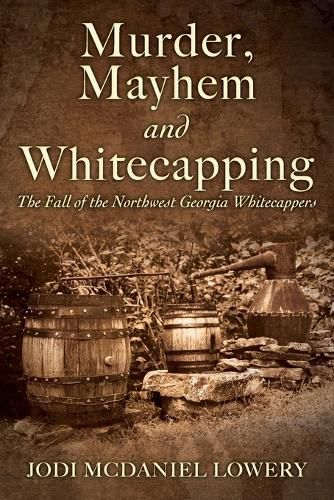
Murder, Mayhem and Whitecapping is set in northwest Georgia 1894. It is the story of two men who were attacked by a group of whitecappers, men sworn by a blood oath to protect moonshiners, remove immoral people from their communities, but most of all to protect their own. The area of northwest Georgia had a membership of 800-1000 men. Henry Worley, a whitecapper himself, turns on his brotherhood, and manages to survive the hangman's noose but a week later is shot and killed by men he once called friends. A few months later, William Roper, who has been turning in moonshiners for a profit, finds himself a target as well. He is attacked in the middle of the night by whitecappers, who shoot him and leave him for dead in an abandoned copper pit. After six days, he is rescued from the pit and eventually testifies in federal court against his attackers. The federal government would eventually charge 30+ men, many of them prominent individuals in the county, with conspiracy. These two trials, as well as subsequent pleas, would eventually lead to the demise of the whitecappers in northwest Georgia. The trials would be covered extensively by The Atlanta Constitution. It along with federal court transcripts, essays on moonshining and whitecapping, and other historical references, serve as sources for this historical, nonfiction book.
$9.00 standard shipping within Australia
FREE standard shipping within Australia for orders over $100.00
Express & International shipping calculated at checkout
Stock availability can be subject to change without notice. We recommend calling the shop or contacting our online team to check availability of low stock items. Please see our Shopping Online page for more details.
This title is printed to order. This book may have been self-published. If so, we cannot guarantee the quality of the content. In the main most books will have gone through the editing process however some may not. We therefore suggest that you be aware of this before ordering this book. If in doubt check either the author or publisher’s details as we are unable to accept any returns unless they are faulty. Please contact us if you have any questions.
Murder, Mayhem and Whitecapping is set in northwest Georgia 1894. It is the story of two men who were attacked by a group of whitecappers, men sworn by a blood oath to protect moonshiners, remove immoral people from their communities, but most of all to protect their own. The area of northwest Georgia had a membership of 800-1000 men. Henry Worley, a whitecapper himself, turns on his brotherhood, and manages to survive the hangman's noose but a week later is shot and killed by men he once called friends. A few months later, William Roper, who has been turning in moonshiners for a profit, finds himself a target as well. He is attacked in the middle of the night by whitecappers, who shoot him and leave him for dead in an abandoned copper pit. After six days, he is rescued from the pit and eventually testifies in federal court against his attackers. The federal government would eventually charge 30+ men, many of them prominent individuals in the county, with conspiracy. These two trials, as well as subsequent pleas, would eventually lead to the demise of the whitecappers in northwest Georgia. The trials would be covered extensively by The Atlanta Constitution. It along with federal court transcripts, essays on moonshining and whitecapping, and other historical references, serve as sources for this historical, nonfiction book.
Search our extensive online catalogue.
