Readings Newsletter
Become a Readings Member to make your shopping experience even easier.
Sign in or sign up for free!
You’re not far away from qualifying for FREE standard shipping within Australia
You’ve qualified for FREE standard shipping within Australia
The cart is loading…


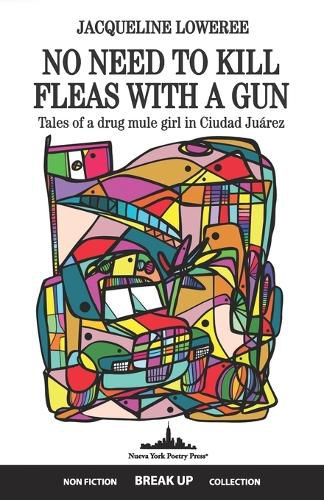
In No Need to Kill Fleas with a Gun, a young girl guides us through the most intimate and deeply cherished contours of growing up along the U.S.-Mexico border. This is not a work offiction, it is an exercise of memory. Ten true stories from the banks of the Rio Bravo illustrate, almost anthropologically, what it means to live among "anecdotes, sayings, food, laughter, and... insatiable sorrow".
The author introduces us to people like Moy, a tortero murdered for being gay; Chachito, a goat slaughtered in front of his best friend; Paquita la del Barrio, a feminist icon; Dona Maria, an elderly woman who feared dying alone and burned; Canelo, a flea-ridden guard dog; and Ciudad Juarez, not as a literary backdrop, but as a character in its own right.
Structural violence is not a passing theme but the thread that ties these ten stories together, revealing a different face in every conflict. The childhood of "a mule girl" is not innocent, rather it is wounded, it is memory that refuses to be buried. With a voice both sharp and tender, Jacqueline Loweree offers a book that serves as testimony, tribute, and reckoning with the past.
$9.00 standard shipping within Australia
FREE standard shipping within Australia for orders over $100.00
Express & International shipping calculated at checkout
Stock availability can be subject to change without notice. We recommend calling the shop or contacting our online team to check availability of low stock items. Please see our Shopping Online page for more details.
In No Need to Kill Fleas with a Gun, a young girl guides us through the most intimate and deeply cherished contours of growing up along the U.S.-Mexico border. This is not a work offiction, it is an exercise of memory. Ten true stories from the banks of the Rio Bravo illustrate, almost anthropologically, what it means to live among "anecdotes, sayings, food, laughter, and... insatiable sorrow".
The author introduces us to people like Moy, a tortero murdered for being gay; Chachito, a goat slaughtered in front of his best friend; Paquita la del Barrio, a feminist icon; Dona Maria, an elderly woman who feared dying alone and burned; Canelo, a flea-ridden guard dog; and Ciudad Juarez, not as a literary backdrop, but as a character in its own right.
Structural violence is not a passing theme but the thread that ties these ten stories together, revealing a different face in every conflict. The childhood of "a mule girl" is not innocent, rather it is wounded, it is memory that refuses to be buried. With a voice both sharp and tender, Jacqueline Loweree offers a book that serves as testimony, tribute, and reckoning with the past.
Search our extensive online catalogue.
