Readings Newsletter
Become a Readings Member to make your shopping experience even easier.
Sign in or sign up for free!
You’re not far away from qualifying for FREE standard shipping within Australia
You’ve qualified for FREE standard shipping within Australia
The cart is loading…


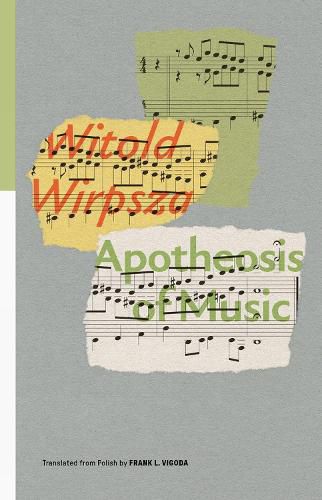
The first English-language collection of Witold Wirpsza, a major post-war Polish poet known for his subversive language, irony, and political satire. Witold Wirpsza's poetry belongs to an experimental and intellectual current less present in the Whitmanian English-language tradition. Reveling in spoof, buffoonery, the grotesque, paradox, hyperbole, and nonsense, his work employs every poetic means to undermine our propensity to take what is being said at face value. His linguistic explorations stem from a mistrust in language as an adequate means of communication and a scrutiny of its susceptibility to abuse and misuse for political ends. By turns 'difficult,' abstract, darkly humorous, his poetry is steeped in ethical and social concerns. This collection draws from his many books, covering a period from the late 1940s to the 1980s, and includes poetic cycles on Stalin, on music, on dance, and the 1955 exhibit, The Family of Man.
$9.00 standard shipping within Australia
FREE standard shipping within Australia for orders over $100.00
Express & International shipping calculated at checkout
Stock availability can be subject to change without notice. We recommend calling the shop or contacting our online team to check availability of low stock items. Please see our Shopping Online page for more details.
The first English-language collection of Witold Wirpsza, a major post-war Polish poet known for his subversive language, irony, and political satire. Witold Wirpsza's poetry belongs to an experimental and intellectual current less present in the Whitmanian English-language tradition. Reveling in spoof, buffoonery, the grotesque, paradox, hyperbole, and nonsense, his work employs every poetic means to undermine our propensity to take what is being said at face value. His linguistic explorations stem from a mistrust in language as an adequate means of communication and a scrutiny of its susceptibility to abuse and misuse for political ends. By turns 'difficult,' abstract, darkly humorous, his poetry is steeped in ethical and social concerns. This collection draws from his many books, covering a period from the late 1940s to the 1980s, and includes poetic cycles on Stalin, on music, on dance, and the 1955 exhibit, The Family of Man.
Search our extensive online catalogue.
