Readings Newsletter
Become a Readings Member to make your shopping experience even easier.
Sign in or sign up for free!
You’re not far away from qualifying for FREE standard shipping within Australia
You’ve qualified for FREE standard shipping within Australia
The cart is loading…


Why did Marcel Proust have bonsai beside his bed? What was Jane Austen doing, coveting an apricot? How was Friedrich Nietzsche inspired by his ‘thought tree’?
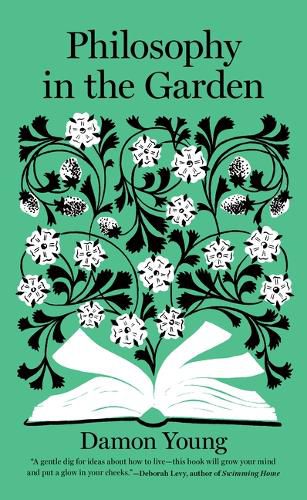
In Philosophy in the Garden, Damon Young explores one of literature’s most intimate relationships: authors and their gardens. For some, the garden provided a retreat from workaday labor; for others, solitude’s quiet counsel. For all, it played a philosophical role: giving their ideas a new life. What unites the authors–Proust, Woolf, Colette, Rousseau, Orwell, Emily Dickinson, Kazantzakis–portrayed in Philosophy in the Garden is not any one ideal, but a devotion to the garden itself: to its philosophical fertility. Despite being bookworms and paper moths, they did some of their best thinking al fresco. (Even Jean-Paul Sartre, whose hero in Nausea was sickened by a chestnut tree.)
Philosophy in the Garden reveals the profound thoughts discovered in parks, backyards, and pot-plants. It does not provide tips for mowing overgrown couch grass, or mulching a dry Japanese maple. It is a philosophical companion to the garden’s labors and joys.
$9.00 standard shipping within Australia
FREE standard shipping within Australia for orders over $100.00
Express & International shipping calculated at checkout
Stock availability can be subject to change without notice. We recommend calling the shop or contacting our online team to check availability of low stock items. Please see our Shopping Online page for more details.
Why did Marcel Proust have bonsai beside his bed? What was Jane Austen doing, coveting an apricot? How was Friedrich Nietzsche inspired by his ‘thought tree’?
In Philosophy in the Garden, Damon Young explores one of literature’s most intimate relationships: authors and their gardens. For some, the garden provided a retreat from workaday labor; for others, solitude’s quiet counsel. For all, it played a philosophical role: giving their ideas a new life. What unites the authors–Proust, Woolf, Colette, Rousseau, Orwell, Emily Dickinson, Kazantzakis–portrayed in Philosophy in the Garden is not any one ideal, but a devotion to the garden itself: to its philosophical fertility. Despite being bookworms and paper moths, they did some of their best thinking al fresco. (Even Jean-Paul Sartre, whose hero in Nausea was sickened by a chestnut tree.)
Philosophy in the Garden reveals the profound thoughts discovered in parks, backyards, and pot-plants. It does not provide tips for mowing overgrown couch grass, or mulching a dry Japanese maple. It is a philosophical companion to the garden’s labors and joys.
Search our extensive online catalogue.
