Readings Newsletter
Become a Readings Member to make your shopping experience even easier.
Sign in or sign up for free!
You’re not far away from qualifying for FREE standard shipping within Australia
You’ve qualified for FREE standard shipping within Australia
The cart is loading…


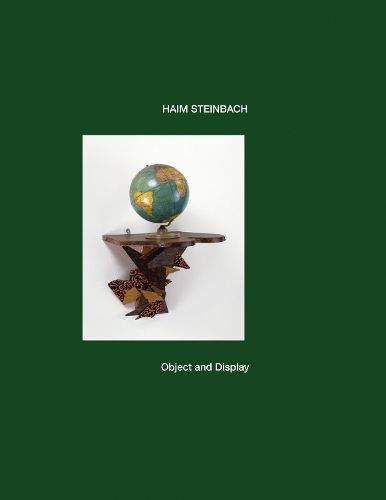
Primarily known for his paradigmatic shelves displaying everyday objects, Haim Steinbach (born 1944) has developed a practice that evolved from early minimalist painting with grids and monochromes to later large-scale installations that have seldom been seen in the US. Growing out of a traveling exhibition that features works drawn from throughout Steinbach’s career, as well as archival materials and new site-specific installations, Object and Display urges readers to take a closer look at this seminal artist’s works. Hundreds of full-color illustrations document the exhibition, which included photographs, models and recreations from past works, along with photography of the site-specific installations that appeared at each institution. New essays by writers Johanna Burton and Germano Celant explore the evolution of Steinbach’s practice and his investigations into what constitutes an art object and how art and objects are displayed.
$9.00 standard shipping within Australia
FREE standard shipping within Australia for orders over $100.00
Express & International shipping calculated at checkout
Stock availability can be subject to change without notice. We recommend calling the shop or contacting our online team to check availability of low stock items. Please see our Shopping Online page for more details.
Primarily known for his paradigmatic shelves displaying everyday objects, Haim Steinbach (born 1944) has developed a practice that evolved from early minimalist painting with grids and monochromes to later large-scale installations that have seldom been seen in the US. Growing out of a traveling exhibition that features works drawn from throughout Steinbach’s career, as well as archival materials and new site-specific installations, Object and Display urges readers to take a closer look at this seminal artist’s works. Hundreds of full-color illustrations document the exhibition, which included photographs, models and recreations from past works, along with photography of the site-specific installations that appeared at each institution. New essays by writers Johanna Burton and Germano Celant explore the evolution of Steinbach’s practice and his investigations into what constitutes an art object and how art and objects are displayed.
Search our extensive online catalogue.
