Readings Newsletter
Become a Readings Member to make your shopping experience even easier.
Sign in or sign up for free!
You’re not far away from qualifying for FREE standard shipping within Australia
You’ve qualified for FREE standard shipping within Australia
The cart is loading…


This title is printed to order. This book may have been self-published. If so, we cannot guarantee the quality of the content. In the main most books will have gone through the editing process however some may not. We therefore suggest that you be aware of this before ordering this book. If in doubt check either the author or publisher’s details as we are unable to accept any returns unless they are faulty. Please contact us if you have any questions.
An Ancient Foundation for Modern Thought
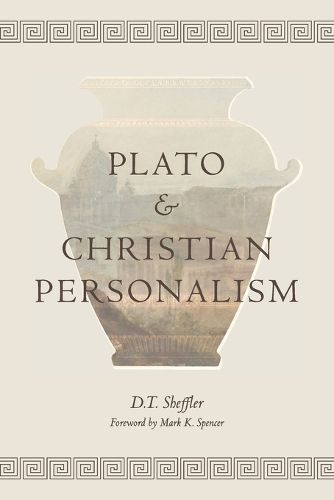
This groundbreaking study challenges a scholarly impasse that has persisted for generations. Personalist philosophers have criticized Plato for allegedly devaluing the individual person, while Platonic scholars have confined their subject to the archives of ancient history. D.T. Sheffler reveals that both traditions have missed something crucial: Plato's philosophy offers unexpected resources for understanding personalist commitments.
Sheffler demonstrates that Plato's revolutionary insights about the soul-its transcendence, its dignity, its capacity for self-knowledge-established philosophical foundations that resonate deeply with later Christian personalism. Far from reducing persons to abstract ideas, Plato articulated what makes each human soul irreducibly unique and infinitely valuable in ways that anticipate central personalist concerns.
Drawing on careful textual analysis and engaging particularly with Dietrich von Hildebrand's phenomenological personalism, this book reveals surprising points of contact and mutual enrichment between ancient Athens and contemporary philosophy. Sheffler shows how Plato's understanding of consciousness, moral agency, and human dignity addresses questions that remain central to personalist thought.
A Living Tradition
This is not intellectual archaeology but a recovery of living wisdom. Sheffler argues that ancient philosophy and Christian personalism, despite their historical distance, share concerns about human nature, freedom, and the good life. Understanding this connection enriches both Platonic studies and personalist philosophy, revealing resources that remain vital for contemporary thought.
For students and scholars exploring the relationship between ancient philosophy and personalist thought, or seeking to understand how Platonic insights contribute to contemporary debates about human dignity and moral agency-this book opens new paths for research and teaching.
About the Author
D.T. Sheffler is a professor of philosophy and academic dean at Memoria College, and an Associated Scholar at the Hildebrand Project. His research and writing focus on Christian Platonism, early Christianity, and beauty.
Mark K. Spencer is a professor of philosophy at the University of St. Thomas, MN, and author of The Irreducibility of the Human Person and Catholicism and the Problem of God.
$9.00 standard shipping within Australia
FREE standard shipping within Australia for orders over $100.00
Express & International shipping calculated at checkout
Stock availability can be subject to change without notice. We recommend calling the shop or contacting our online team to check availability of low stock items. Please see our Shopping Online page for more details.
This title is printed to order. This book may have been self-published. If so, we cannot guarantee the quality of the content. In the main most books will have gone through the editing process however some may not. We therefore suggest that you be aware of this before ordering this book. If in doubt check either the author or publisher’s details as we are unable to accept any returns unless they are faulty. Please contact us if you have any questions.
An Ancient Foundation for Modern Thought
This groundbreaking study challenges a scholarly impasse that has persisted for generations. Personalist philosophers have criticized Plato for allegedly devaluing the individual person, while Platonic scholars have confined their subject to the archives of ancient history. D.T. Sheffler reveals that both traditions have missed something crucial: Plato's philosophy offers unexpected resources for understanding personalist commitments.
Sheffler demonstrates that Plato's revolutionary insights about the soul-its transcendence, its dignity, its capacity for self-knowledge-established philosophical foundations that resonate deeply with later Christian personalism. Far from reducing persons to abstract ideas, Plato articulated what makes each human soul irreducibly unique and infinitely valuable in ways that anticipate central personalist concerns.
Drawing on careful textual analysis and engaging particularly with Dietrich von Hildebrand's phenomenological personalism, this book reveals surprising points of contact and mutual enrichment between ancient Athens and contemporary philosophy. Sheffler shows how Plato's understanding of consciousness, moral agency, and human dignity addresses questions that remain central to personalist thought.
A Living Tradition
This is not intellectual archaeology but a recovery of living wisdom. Sheffler argues that ancient philosophy and Christian personalism, despite their historical distance, share concerns about human nature, freedom, and the good life. Understanding this connection enriches both Platonic studies and personalist philosophy, revealing resources that remain vital for contemporary thought.
For students and scholars exploring the relationship between ancient philosophy and personalist thought, or seeking to understand how Platonic insights contribute to contemporary debates about human dignity and moral agency-this book opens new paths for research and teaching.
About the Author
D.T. Sheffler is a professor of philosophy and academic dean at Memoria College, and an Associated Scholar at the Hildebrand Project. His research and writing focus on Christian Platonism, early Christianity, and beauty.
Mark K. Spencer is a professor of philosophy at the University of St. Thomas, MN, and author of The Irreducibility of the Human Person and Catholicism and the Problem of God.
Search our extensive online catalogue.
