Readings Newsletter
Become a Readings Member to make your shopping experience even easier.
Sign in or sign up for free!
You’re not far away from qualifying for FREE standard shipping within Australia
You’ve qualified for FREE standard shipping within Australia
The cart is loading…


This title is printed to order. This book may have been self-published. If so, we cannot guarantee the quality of the content. In the main most books will have gone through the editing process however some may not. We therefore suggest that you be aware of this before ordering this book. If in doubt check either the author or publisher’s details as we are unable to accept any returns unless they are faulty. Please contact us if you have any questions.
XProc 3.0 is a programming language for processing XML, JSON, and other documents in pipelines. XProc chains conversions and other steps, allowing for potentially complex processing. XProc is especially useful for applications, such as publishing, where content may come from multiple input sources, pass through multiple processing steps and result in multiple output streams.
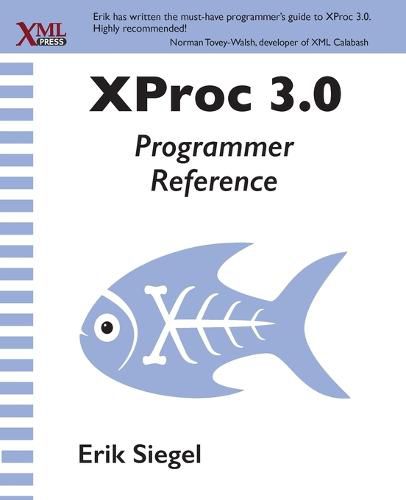
XProc 3.0 Programmer Reference is aimed at programmers and others who process XML. It explains the language in detail, provides examples, and contains a set of example use cases. Anyone who uses the XProc language will find a wealth of information in this book.
Inside the book
Introduction: introduces XProc 3.0 and provides background. Getting started: describes how to process XProc and provides simple examples to get started. XProc fundamentals: provides background information on XProc and basic concepts, such as pipelines, steps, and documents. Programming concepts: introduces the programming concepts used in XProc, including the use of XPath, maps, Attribute and Text Value Templates (AVT/TVT), and more. Defining and populating steps: describes how to declare a step, what a pipeline document looks like, and how to add functionality to a pipeline. Built-in steps: provides an overview of the many built-in steps that can be used to populate XProc pipelines. Extension functions: XProc provides a set of extension functions that are available for use in XPath expressions in XProc pipelines. Examples and recipes: examples of XProc pipelines for specific use cases. Appendices: describes the standard step library and provides an overview of optional built-in steps.
$9.00 standard shipping within Australia
FREE standard shipping within Australia for orders over $100.00
Express & International shipping calculated at checkout
Stock availability can be subject to change without notice. We recommend calling the shop or contacting our online team to check availability of low stock items. Please see our Shopping Online page for more details.
This title is printed to order. This book may have been self-published. If so, we cannot guarantee the quality of the content. In the main most books will have gone through the editing process however some may not. We therefore suggest that you be aware of this before ordering this book. If in doubt check either the author or publisher’s details as we are unable to accept any returns unless they are faulty. Please contact us if you have any questions.
XProc 3.0 is a programming language for processing XML, JSON, and other documents in pipelines. XProc chains conversions and other steps, allowing for potentially complex processing. XProc is especially useful for applications, such as publishing, where content may come from multiple input sources, pass through multiple processing steps and result in multiple output streams.
XProc 3.0 Programmer Reference is aimed at programmers and others who process XML. It explains the language in detail, provides examples, and contains a set of example use cases. Anyone who uses the XProc language will find a wealth of information in this book.
Inside the book
Introduction: introduces XProc 3.0 and provides background. Getting started: describes how to process XProc and provides simple examples to get started. XProc fundamentals: provides background information on XProc and basic concepts, such as pipelines, steps, and documents. Programming concepts: introduces the programming concepts used in XProc, including the use of XPath, maps, Attribute and Text Value Templates (AVT/TVT), and more. Defining and populating steps: describes how to declare a step, what a pipeline document looks like, and how to add functionality to a pipeline. Built-in steps: provides an overview of the many built-in steps that can be used to populate XProc pipelines. Extension functions: XProc provides a set of extension functions that are available for use in XPath expressions in XProc pipelines. Examples and recipes: examples of XProc pipelines for specific use cases. Appendices: describes the standard step library and provides an overview of optional built-in steps.
Search our extensive online catalogue.
