Readings Newsletter
Become a Readings Member to make your shopping experience even easier.
Sign in or sign up for free!
You’re not far away from qualifying for FREE standard shipping within Australia
You’ve qualified for FREE standard shipping within Australia
The cart is loading…


This title is printed to order. This book may have been self-published. If so, we cannot guarantee the quality of the content. In the main most books will have gone through the editing process however some may not. We therefore suggest that you be aware of this before ordering this book. If in doubt check either the author or publisher’s details as we are unable to accept any returns unless they are faulty. Please contact us if you have any questions.
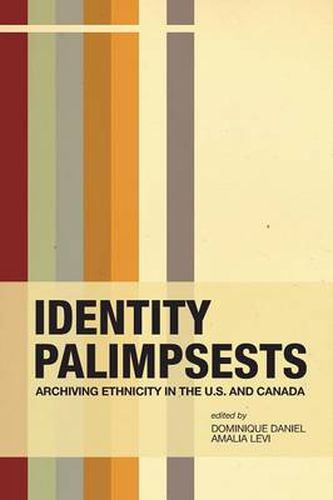
Identity Palimpsests assesses the ways ethnic identities and other forms of belonging are affected by current practices in ethnic archiving. The book begins with an overview of the evolution of the ways ethnic organizations and communities have collected, preserved and provided access to their heritage. It then goes on to examine contemporary practices and theories in the context of a cultural heritage sector that is today defined by the digital medium and the Web. Institutions involved in ethnic archiving include libraries, archives and museums that document the history immigration and ethnicity in the United States and Canada. Archival science has long challenged the image of the archivist as a neutral guardian of the historical record and recognized her role as an active shaper of archives, but historians have yet to discuss implications for historical research. This book is designed to bring new theoretical insight into the impact of this challenge on ethnic archiving, to suggest ways historians are affected, and to begin to study implications for the archivist’s practice. The book also innovates by exploring the impact that archivists have on the very ethnic identities they are trying to preserve. The book’s intended audience includes cultural heritage professionals, iSchools and Library Science schools’ students and faculty, and historians. While the book deals with heritage institutions in the U.S. and Canada, it appeals to an international audience.
$9.00 standard shipping within Australia
FREE standard shipping within Australia for orders over $100.00
Express & International shipping calculated at checkout
Stock availability can be subject to change without notice. We recommend calling the shop or contacting our online team to check availability of low stock items. Please see our Shopping Online page for more details.
This title is printed to order. This book may have been self-published. If so, we cannot guarantee the quality of the content. In the main most books will have gone through the editing process however some may not. We therefore suggest that you be aware of this before ordering this book. If in doubt check either the author or publisher’s details as we are unable to accept any returns unless they are faulty. Please contact us if you have any questions.
Identity Palimpsests assesses the ways ethnic identities and other forms of belonging are affected by current practices in ethnic archiving. The book begins with an overview of the evolution of the ways ethnic organizations and communities have collected, preserved and provided access to their heritage. It then goes on to examine contemporary practices and theories in the context of a cultural heritage sector that is today defined by the digital medium and the Web. Institutions involved in ethnic archiving include libraries, archives and museums that document the history immigration and ethnicity in the United States and Canada. Archival science has long challenged the image of the archivist as a neutral guardian of the historical record and recognized her role as an active shaper of archives, but historians have yet to discuss implications for historical research. This book is designed to bring new theoretical insight into the impact of this challenge on ethnic archiving, to suggest ways historians are affected, and to begin to study implications for the archivist’s practice. The book also innovates by exploring the impact that archivists have on the very ethnic identities they are trying to preserve. The book’s intended audience includes cultural heritage professionals, iSchools and Library Science schools’ students and faculty, and historians. While the book deals with heritage institutions in the U.S. and Canada, it appeals to an international audience.
Search our extensive online catalogue.
