Readings Newsletter
Become a Readings Member to make your shopping experience even easier.
Sign in or sign up for free!
You’re not far away from qualifying for FREE standard shipping within Australia
You’ve qualified for FREE standard shipping within Australia
The cart is loading…


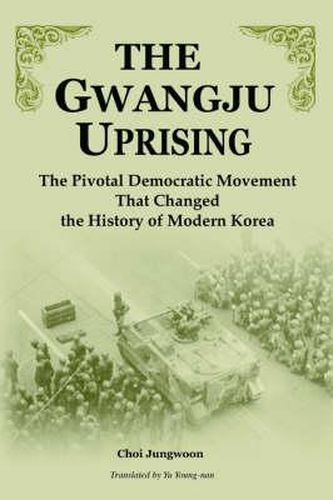
This book explores the implications of the Gwangju Democratic Uprising, which took place in May 1980 when paratroopers brutally broke up a group of protesters who demonstrated against General Chun Doohwan’s acceptance of the Korean presidency. People who lived in the Gwangju and South Jeolla provinces fought the paratroopers, insisting that martial law be abolished. During the event now known as the Gwangju Uprising, 191 people perished and 852 were wounded. Here, Choi Jung-woon explores the ramifications of this pivotal day in Korea’s modern history on the country’s society, economy and politics. Rather than give a traditional historical narrative of the event, he gives an indepth analysis of the participants’ mentalities and incentives, and the type of the brutality involved in the uprising. He also examines the stages the participants went through during the uprising, from the calm and togetherness they felt before the event, to the uprising’s turmoil and then a return to peace after the event. The author analyzes various discourses related to the uprising, looking into the ideological underpinnings of those who commented on the uprising. The book also discusses how the uprising has deeply influenced social and labor movements and political relationships in Korea.
$9.00 standard shipping within Australia
FREE standard shipping within Australia for orders over $100.00
Express & International shipping calculated at checkout
Stock availability can be subject to change without notice. We recommend calling the shop or contacting our online team to check availability of low stock items. Please see our Shopping Online page for more details.
This book explores the implications of the Gwangju Democratic Uprising, which took place in May 1980 when paratroopers brutally broke up a group of protesters who demonstrated against General Chun Doohwan’s acceptance of the Korean presidency. People who lived in the Gwangju and South Jeolla provinces fought the paratroopers, insisting that martial law be abolished. During the event now known as the Gwangju Uprising, 191 people perished and 852 were wounded. Here, Choi Jung-woon explores the ramifications of this pivotal day in Korea’s modern history on the country’s society, economy and politics. Rather than give a traditional historical narrative of the event, he gives an indepth analysis of the participants’ mentalities and incentives, and the type of the brutality involved in the uprising. He also examines the stages the participants went through during the uprising, from the calm and togetherness they felt before the event, to the uprising’s turmoil and then a return to peace after the event. The author analyzes various discourses related to the uprising, looking into the ideological underpinnings of those who commented on the uprising. The book also discusses how the uprising has deeply influenced social and labor movements and political relationships in Korea.
Search our extensive online catalogue.
