Readings Newsletter
Become a Readings Member to make your shopping experience even easier.
Sign in or sign up for free!
You’re not far away from qualifying for FREE standard shipping within Australia
You’ve qualified for FREE standard shipping within Australia
The cart is loading…


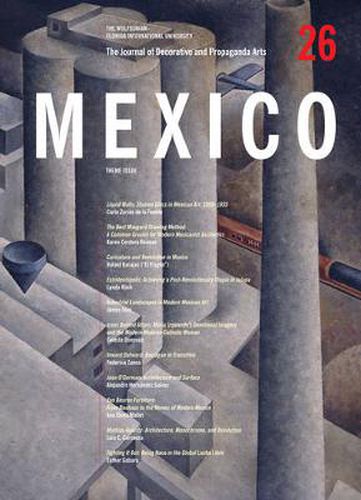
This Mexico-themed issue of The Journal of Decorative and Propaganda Arts opens up new perspectives in the field of twentieth-century Mexican art and visual culture. It brings together research on a wide array of understudied developments in architecture, painting, decorative arts, propaganda and other media and reveals that Mexican modernism was more multifaceted than is typically proposed.
The essays collected here look beyond the most well-known aspects of postrevolutionary Mexican culture. Together, they provide an expanded portrait of the so-called Mexican Renaissance by addressing diverse (and sometimes contradictory) aesthetic and social proposals that embraced technological modernity, challenged gender hierarchies, employed aesthetic innovation, and entered into dialogue with international currents.
The contributors are Rafael Barajas ( El Fisgon ), Luis E. Carranza, Karen Cordero Reiman, Celeste Donovan, Esther Gabara, Alejandro Hernandez Galvez, Lynda Klich, Ana Elena Mallet, James Oles, Federica Zanco, and Carla Zurian de la Fuente.
$9.00 standard shipping within Australia
FREE standard shipping within Australia for orders over $100.00
Express & International shipping calculated at checkout
Stock availability can be subject to change without notice. We recommend calling the shop or contacting our online team to check availability of low stock items. Please see our Shopping Online page for more details.
This Mexico-themed issue of The Journal of Decorative and Propaganda Arts opens up new perspectives in the field of twentieth-century Mexican art and visual culture. It brings together research on a wide array of understudied developments in architecture, painting, decorative arts, propaganda and other media and reveals that Mexican modernism was more multifaceted than is typically proposed.
The essays collected here look beyond the most well-known aspects of postrevolutionary Mexican culture. Together, they provide an expanded portrait of the so-called Mexican Renaissance by addressing diverse (and sometimes contradictory) aesthetic and social proposals that embraced technological modernity, challenged gender hierarchies, employed aesthetic innovation, and entered into dialogue with international currents.
The contributors are Rafael Barajas ( El Fisgon ), Luis E. Carranza, Karen Cordero Reiman, Celeste Donovan, Esther Gabara, Alejandro Hernandez Galvez, Lynda Klich, Ana Elena Mallet, James Oles, Federica Zanco, and Carla Zurian de la Fuente.
Search our extensive online catalogue.
