Readings Newsletter
Become a Readings Member to make your shopping experience even easier.
Sign in or sign up for free!
You’re not far away from qualifying for FREE standard shipping within Australia
You’ve qualified for FREE standard shipping within Australia
The cart is loading…


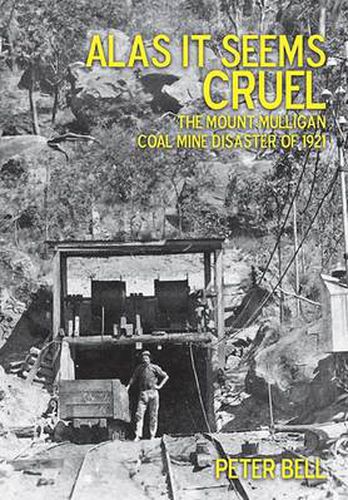
Mount Mulligan is 100km west of Cairns, an impressive natural landmark whose sandstone cliffs look as though a part of the Blue Mountains of New South Wales has somehow been transported 2,000km north. Underlying the mountain are coal deposits that supported a small mining town from 1914 until 1958. There is not much left of the township now. The best place to learn about Mount Mulligan’s history is the cemetery, where nearly a quarter of the little town’s population was buried in less than one week. On 19 September 1921 a massive coal dust explosion in the Mount Mulligan mine killed all 75, or perhaps 76, men and boys who were working underground. This is the story of a horrible event in a remote and beautiful location ninety years ago. Of all peacetime jobs, underground mining is one of the most destructive of human life. Most people are vaguely aware that mining is a hazardous occupation, but probably few understand the scale of that hazard. If one were to ask what was the greatest disaster ever to occur in Australia, measured in terms of loss of human life, a well-informed answer might mention the Bathurst Bay cyclone of 1899 which took the lives of at least 239 crew members of wrecked pearling luggers, or perhaps the wreck of the immigrant ship Cataraqui on King Island in Bass Strait in 1845 when 400 were drowned. But very few people know that 623 miners were killed in the day-to-day operations of the Broken Hill mines between 1888 and 1964. They died mostly in ones and twos, unreported outside their immediate community, and no one ever refers to their collective loss as the Broken Hill disaster.
$9.00 standard shipping within Australia
FREE standard shipping within Australia for orders over $100.00
Express & International shipping calculated at checkout
Stock availability can be subject to change without notice. We recommend calling the shop or contacting our online team to check availability of low stock items. Please see our Shopping Online page for more details.
Mount Mulligan is 100km west of Cairns, an impressive natural landmark whose sandstone cliffs look as though a part of the Blue Mountains of New South Wales has somehow been transported 2,000km north. Underlying the mountain are coal deposits that supported a small mining town from 1914 until 1958. There is not much left of the township now. The best place to learn about Mount Mulligan’s history is the cemetery, where nearly a quarter of the little town’s population was buried in less than one week. On 19 September 1921 a massive coal dust explosion in the Mount Mulligan mine killed all 75, or perhaps 76, men and boys who were working underground. This is the story of a horrible event in a remote and beautiful location ninety years ago. Of all peacetime jobs, underground mining is one of the most destructive of human life. Most people are vaguely aware that mining is a hazardous occupation, but probably few understand the scale of that hazard. If one were to ask what was the greatest disaster ever to occur in Australia, measured in terms of loss of human life, a well-informed answer might mention the Bathurst Bay cyclone of 1899 which took the lives of at least 239 crew members of wrecked pearling luggers, or perhaps the wreck of the immigrant ship Cataraqui on King Island in Bass Strait in 1845 when 400 were drowned. But very few people know that 623 miners were killed in the day-to-day operations of the Broken Hill mines between 1888 and 1964. They died mostly in ones and twos, unreported outside their immediate community, and no one ever refers to their collective loss as the Broken Hill disaster.
Search our extensive online catalogue.
