Readings Newsletter
Become a Readings Member to make your shopping experience even easier.
Sign in or sign up for free!
You’re not far away from qualifying for FREE standard shipping within Australia
You’ve qualified for FREE standard shipping within Australia
The cart is loading…


This title is printed to order. This book may have been self-published. If so, we cannot guarantee the quality of the content. In the main most books will have gone through the editing process however some may not. We therefore suggest that you be aware of this before ordering this book. If in doubt check either the author or publisher’s details as we are unable to accept any returns unless they are faulty. Please contact us if you have any questions.
Competencies are everywhere. Capability is not.
Organizations invest heavily in competency frameworks. They embed them into hiring, performance management, leadership development, culture programs, and professional standards. And yet, despite their ubiquity, competencies remain one of the least examined and least governed tools in organizational life.
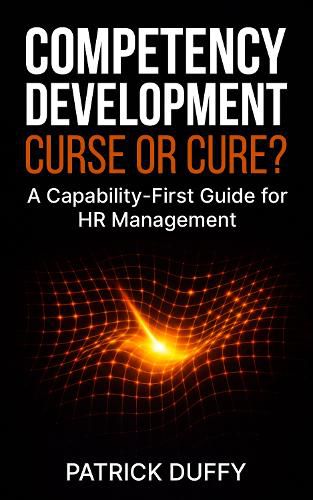
Competency Development: Curse or Cure? asks a tough question: has competency modeling become the answer to the wrong problem?
Drawing on organization science, human performance theory, and real-world practice, this book challenges the way competencies are defined, modeled, assessed, and governed. It shows how competencies frequently drift into symbolic language, cultural enforcement, and performative compliance-while failing to explain or improve actual performance.
But this isn't an anti-competency book. It's a capability-first guide that shows when competencies genuinely matter, when they don't, and how they must be positioned inside a disciplined understanding of how organizations really work. It introduces a clear domain architecture for modeling competencies, explains why most assessment practices fall short, and sets out how competency systems can be governed so they remain useful rather than becoming institutional "zombies."
This book replaces enthusiasm with judgment, and frameworks with evidence. If you care less about having competencies and more about building real capability, this book is for you.
$9.00 standard shipping within Australia
FREE standard shipping within Australia for orders over $100.00
Express & International shipping calculated at checkout
Stock availability can be subject to change without notice. We recommend calling the shop or contacting our online team to check availability of low stock items. Please see our Shopping Online page for more details.
This title is printed to order. This book may have been self-published. If so, we cannot guarantee the quality of the content. In the main most books will have gone through the editing process however some may not. We therefore suggest that you be aware of this before ordering this book. If in doubt check either the author or publisher’s details as we are unable to accept any returns unless they are faulty. Please contact us if you have any questions.
Competencies are everywhere. Capability is not.
Organizations invest heavily in competency frameworks. They embed them into hiring, performance management, leadership development, culture programs, and professional standards. And yet, despite their ubiquity, competencies remain one of the least examined and least governed tools in organizational life.
Competency Development: Curse or Cure? asks a tough question: has competency modeling become the answer to the wrong problem?
Drawing on organization science, human performance theory, and real-world practice, this book challenges the way competencies are defined, modeled, assessed, and governed. It shows how competencies frequently drift into symbolic language, cultural enforcement, and performative compliance-while failing to explain or improve actual performance.
But this isn't an anti-competency book. It's a capability-first guide that shows when competencies genuinely matter, when they don't, and how they must be positioned inside a disciplined understanding of how organizations really work. It introduces a clear domain architecture for modeling competencies, explains why most assessment practices fall short, and sets out how competency systems can be governed so they remain useful rather than becoming institutional "zombies."
This book replaces enthusiasm with judgment, and frameworks with evidence. If you care less about having competencies and more about building real capability, this book is for you.
Search our extensive online catalogue.
