Readings Newsletter
Become a Readings Member to make your shopping experience even easier.
Sign in or sign up for free!
You’re not far away from qualifying for FREE standard shipping within Australia
You’ve qualified for FREE standard shipping within Australia
The cart is loading…


This title is printed to order. This book may have been self-published. If so, we cannot guarantee the quality of the content. In the main most books will have gone through the editing process however some may not. We therefore suggest that you be aware of this before ordering this book. If in doubt check either the author or publisher’s details as we are unable to accept any returns unless they are faulty. Please contact us if you have any questions.
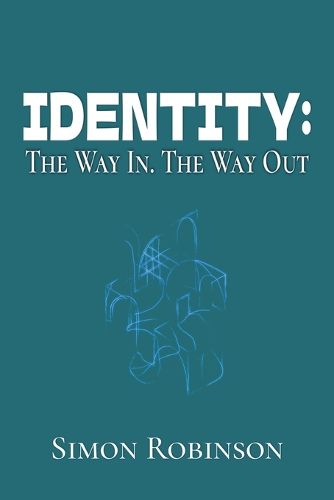
Identity: The Way In. The Way Out. is a quiet, first-person inquiry into selfhood, narrative, and the effort of maintaining a coherent sense of "I."
Written with deliberate restraint, the book unfolds as a sequence of short reflections that trace how identity forms, hardens, and quietly unravels under psychological pressure. Rather than offering explanation, theory, or solutions, it stays close to lived experience, observing how language, memory, and self-description shape what feels stable and what begins to loosen.
The narrative does not seek to resolve questions of identity or transform uncertainty into insight. It does not validate conclusions drawn during periods of psychological distress. Instead, it examines how attention, naming, and interpretation interact in moments of vulnerability, and how certainty itself can become destabilising.
This revised edition expands and reorganises the work into a continuous narrative arc, accompanied by minimal symbolic imagery. The emphasis is on observation rather than explanation, allowing readers to recognise familiar patterns of inner experience without being told what to believe or how to recover.
This book is not a medical guide and does not replace professional care. It is written for readers who want careful, honest language for what questions of identity can feel like from the inside, and who value clarity, restraint, and precision over advice or reassurance.
$9.00 standard shipping within Australia
FREE standard shipping within Australia for orders over $100.00
Express & International shipping calculated at checkout
Stock availability can be subject to change without notice. We recommend calling the shop or contacting our online team to check availability of low stock items. Please see our Shopping Online page for more details.
This title is printed to order. This book may have been self-published. If so, we cannot guarantee the quality of the content. In the main most books will have gone through the editing process however some may not. We therefore suggest that you be aware of this before ordering this book. If in doubt check either the author or publisher’s details as we are unable to accept any returns unless they are faulty. Please contact us if you have any questions.
Identity: The Way In. The Way Out. is a quiet, first-person inquiry into selfhood, narrative, and the effort of maintaining a coherent sense of "I."
Written with deliberate restraint, the book unfolds as a sequence of short reflections that trace how identity forms, hardens, and quietly unravels under psychological pressure. Rather than offering explanation, theory, or solutions, it stays close to lived experience, observing how language, memory, and self-description shape what feels stable and what begins to loosen.
The narrative does not seek to resolve questions of identity or transform uncertainty into insight. It does not validate conclusions drawn during periods of psychological distress. Instead, it examines how attention, naming, and interpretation interact in moments of vulnerability, and how certainty itself can become destabilising.
This revised edition expands and reorganises the work into a continuous narrative arc, accompanied by minimal symbolic imagery. The emphasis is on observation rather than explanation, allowing readers to recognise familiar patterns of inner experience without being told what to believe or how to recover.
This book is not a medical guide and does not replace professional care. It is written for readers who want careful, honest language for what questions of identity can feel like from the inside, and who value clarity, restraint, and precision over advice or reassurance.
Search our extensive online catalogue.
