Readings Newsletter
Become a Readings Member to make your shopping experience even easier.
Sign in or sign up for free!
You’re not far away from qualifying for FREE standard shipping within Australia
You’ve qualified for FREE standard shipping within Australia
The cart is loading…


Scholars around the world on how climate change stands to alter our research methods.
Scholars around the world on how climate change stands to alter our research methods.
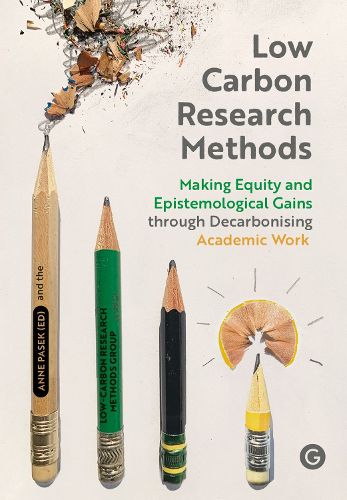
Current research norms are increasingly unsustainable for the planet and scholars alike. Dominant modes of research and research dissemination place a premium on frequent travel and ever-expanding and energy-intensive archives of digital data. This shapes the character of research and the research community, advantaging hyper-mobile, well-resourced scholarly subjects above others, deepening both the climate and labor crises in academia. Low Carbon Research Methods explores the epistemological and equity impacts of high-carbon research as well as the potential gains made possible through a transition towards slower, less mobile, and more collaborative forms of inquiry and exchange. Through short, multi-authored chapters the book examines the prospects and challenges of decarbonizing different academic methods, including archival, ethnographic, arts-based, textual, and digital modes of inquiry. Its authors provide self-reflexive analyses, practical advice, and provocations to researchers new to critical methodology, as well as those returning to their methods with new questions prompted by growing climate justice imperatives, the disruptions of the COVID-19 pandemic, and long-standing critiques from feminist, Global South, and disability studies scholars. In its emphasis on method, the book offers a generative meeting point for these varied concerns and coalitions. Methods usefully tie questions of individual behaviour choices to institutional policies and social practices-specifically around labor-and as such can provide useful avenues of collective action. Finally, the book also builds its project through distinct experiments in form. Its authors explore a range of styles, some specific to their disciplinary traditions, and some drawn from diverse genres including the manifesto, epistolary correspondence, group dialog, memoir, and speculative fiction. These variations in style underscore the argumentative aims of the book as a whole- to open, but not conclusively decide, discussions on this topic within different communities of practice.
$9.00 standard shipping within Australia
FREE standard shipping within Australia for orders over $100.00
Express & International shipping calculated at checkout
Stock availability can be subject to change without notice. We recommend calling the shop or contacting our online team to check availability of low stock items. Please see our Shopping Online page for more details.
Scholars around the world on how climate change stands to alter our research methods.
Scholars around the world on how climate change stands to alter our research methods.
Current research norms are increasingly unsustainable for the planet and scholars alike. Dominant modes of research and research dissemination place a premium on frequent travel and ever-expanding and energy-intensive archives of digital data. This shapes the character of research and the research community, advantaging hyper-mobile, well-resourced scholarly subjects above others, deepening both the climate and labor crises in academia. Low Carbon Research Methods explores the epistemological and equity impacts of high-carbon research as well as the potential gains made possible through a transition towards slower, less mobile, and more collaborative forms of inquiry and exchange. Through short, multi-authored chapters the book examines the prospects and challenges of decarbonizing different academic methods, including archival, ethnographic, arts-based, textual, and digital modes of inquiry. Its authors provide self-reflexive analyses, practical advice, and provocations to researchers new to critical methodology, as well as those returning to their methods with new questions prompted by growing climate justice imperatives, the disruptions of the COVID-19 pandemic, and long-standing critiques from feminist, Global South, and disability studies scholars. In its emphasis on method, the book offers a generative meeting point for these varied concerns and coalitions. Methods usefully tie questions of individual behaviour choices to institutional policies and social practices-specifically around labor-and as such can provide useful avenues of collective action. Finally, the book also builds its project through distinct experiments in form. Its authors explore a range of styles, some specific to their disciplinary traditions, and some drawn from diverse genres including the manifesto, epistolary correspondence, group dialog, memoir, and speculative fiction. These variations in style underscore the argumentative aims of the book as a whole- to open, but not conclusively decide, discussions on this topic within different communities of practice.
Search our extensive online catalogue.
