Readings Newsletter
Become a Readings Member to make your shopping experience even easier.
Sign in or sign up for free!
You’re not far away from qualifying for FREE standard shipping within Australia
You’ve qualified for FREE standard shipping within Australia
The cart is loading…


This title is printed to order. This book may have been self-published. If so, we cannot guarantee the quality of the content. In the main most books will have gone through the editing process however some may not. We therefore suggest that you be aware of this before ordering this book. If in doubt check either the author or publisher’s details as we are unable to accept any returns unless they are faulty. Please contact us if you have any questions.
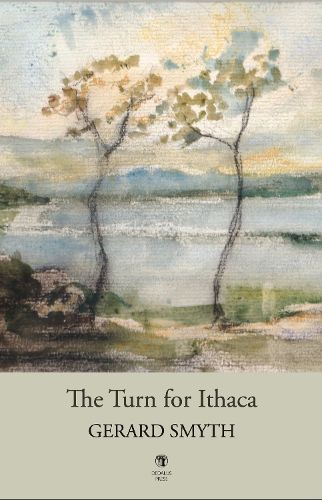
In The Turn for Ithaca, his 11th collection of poems, Gerard Smyth further explores his perennial subject of memory, its mysteries and revelations. In 'My Father's House', one of many poems from the land of his youth, he writes, 'One day I turned to look and it was gone', the disappearance, as ever for Smyth, an invitation to go deeper. Elsewhere, during a Zoom call, he is reminded of books "borrowed but never returned", while another poem about a broken phone box imagines "all the old conversations under the dust". Voices of loved ones, teachers and other poets populate this book whose "turn" is very much part of an onward journey.
"The Turn for Ithaca is a collection of exquisite acts of lyric generosity. Smyth's technical accomplishment is lightly-worn, but the poems are the products of a lifetime of dedication and scrupulousness, of days 'fine-tuning' the art. The integrity and humbleness that infuses the work is matched only by the fiercely free spirit of a poet. "
"In Smyth's poetry, history and inheritance, both familial and cultural, are key themes. His is a contemporary voice that celebrates Irish experience in the second half of the twentieth-century and beyond. Many readers will recognize their own life in his poetry, and there is much to treasure in his elegiac body of work which manages to be both uniquely personal while also attuned to the universal concerns of the human condition."
$9.00 standard shipping within Australia
FREE standard shipping within Australia for orders over $100.00
Express & International shipping calculated at checkout
Stock availability can be subject to change without notice. We recommend calling the shop or contacting our online team to check availability of low stock items. Please see our Shopping Online page for more details.
This title is printed to order. This book may have been self-published. If so, we cannot guarantee the quality of the content. In the main most books will have gone through the editing process however some may not. We therefore suggest that you be aware of this before ordering this book. If in doubt check either the author or publisher’s details as we are unable to accept any returns unless they are faulty. Please contact us if you have any questions.
In The Turn for Ithaca, his 11th collection of poems, Gerard Smyth further explores his perennial subject of memory, its mysteries and revelations. In 'My Father's House', one of many poems from the land of his youth, he writes, 'One day I turned to look and it was gone', the disappearance, as ever for Smyth, an invitation to go deeper. Elsewhere, during a Zoom call, he is reminded of books "borrowed but never returned", while another poem about a broken phone box imagines "all the old conversations under the dust". Voices of loved ones, teachers and other poets populate this book whose "turn" is very much part of an onward journey.
"The Turn for Ithaca is a collection of exquisite acts of lyric generosity. Smyth's technical accomplishment is lightly-worn, but the poems are the products of a lifetime of dedication and scrupulousness, of days 'fine-tuning' the art. The integrity and humbleness that infuses the work is matched only by the fiercely free spirit of a poet. "
"In Smyth's poetry, history and inheritance, both familial and cultural, are key themes. His is a contemporary voice that celebrates Irish experience in the second half of the twentieth-century and beyond. Many readers will recognize their own life in his poetry, and there is much to treasure in his elegiac body of work which manages to be both uniquely personal while also attuned to the universal concerns of the human condition."
Search our extensive online catalogue.
