Readings Newsletter
Become a Readings Member to make your shopping experience even easier.
Sign in or sign up for free!
You’re not far away from qualifying for FREE standard shipping within Australia
You’ve qualified for FREE standard shipping within Australia
The cart is loading…


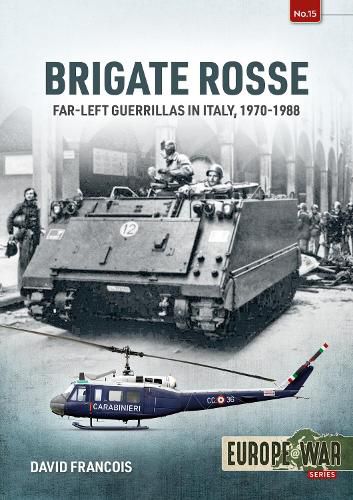
Widespread unrest and political violence shook Italy time and again during the decades following the end of the Second World War, but never as much as during the 1970s and the 1980s. Seeking to counter political enemies
including a conglomerate of right-wing movements, organised crime, and top figures in the economic and political life of the country
in order to create a revolutionary state through an armed struggle, and to remove Italy from the North Atlantic Treaty Organization, in 1970, leftists in Italy began to form the Brigade Rosse
the Red Brigades. Organizing themselves following the examples of the Latin American urban guerrilla movements, and also drawing inspiration from the Italian partisan movement of the Second World War, the Brigate Rosse emerged in Trento in 1970. Their early activities were troubled by infighting between ‘extremist’ and ‘moderate’ wings of the movement, with the latter accusing some of leaders of having links to the intelligence services of several East European countries. Nevertheless, the movement spread to Rome, Genoa, and Venice by the mid-1970s, and began to diversify its activities. During the following years, it became famous for several high-profile kidnappings of judges and industrialists: together with bank robberies and drug- and arms trafficking, these became its primary source of income. The most famous operations by the Brigate Rosse included the kidnapping and murder of the Italian statesman Aldo Moro in 1978, and of Brigadier-General James L Dozier, the Deputy Chief-of-Staff Southern European land forces of NATO in 1981. Drawing upon decades of research with the help of official documentation and the recollections of participants, Brigate Rosse is a detailed study of a major armed leftist movement that shook the fundaments of the Italian state of the 1970s and the 1980s.Brigate Rosse was an armed leftist movement that declared war against the state of Italy
and its membership of NATO
and terrorised the country for nearly two decades. From its inception, the Brigate Rosse drew heavily on the ideology and strategy of the urban guerrillas of Latin America and local experiences during the Second World War. AUTHOR: David Francois, from France, earned his PhD in Contemporary History at the University of Burgundy and specialised in studying militant communism, its military history and relationship between politics and violence in contemporary history. In 2009, he co-authored the Guide des archives de l'Internationale communiste published by the French National Archives and the Maison des sciences de l'Homme in Dijon. He is regularly contributing articles for various French military history magazines and regular contributor to the French history website L'autre cote de la colline. 10 colour and 80 b/w photographss, 4 maps, 12 colour profiles
$9.00 standard shipping within Australia
FREE standard shipping within Australia for orders over $100.00
Express & International shipping calculated at checkout
Stock availability can be subject to change without notice. We recommend calling the shop or contacting our online team to check availability of low stock items. Please see our Shopping Online page for more details.
Widespread unrest and political violence shook Italy time and again during the decades following the end of the Second World War, but never as much as during the 1970s and the 1980s. Seeking to counter political enemies
including a conglomerate of right-wing movements, organised crime, and top figures in the economic and political life of the country
in order to create a revolutionary state through an armed struggle, and to remove Italy from the North Atlantic Treaty Organization, in 1970, leftists in Italy began to form the Brigade Rosse
the Red Brigades. Organizing themselves following the examples of the Latin American urban guerrilla movements, and also drawing inspiration from the Italian partisan movement of the Second World War, the Brigate Rosse emerged in Trento in 1970. Their early activities were troubled by infighting between ‘extremist’ and ‘moderate’ wings of the movement, with the latter accusing some of leaders of having links to the intelligence services of several East European countries. Nevertheless, the movement spread to Rome, Genoa, and Venice by the mid-1970s, and began to diversify its activities. During the following years, it became famous for several high-profile kidnappings of judges and industrialists: together with bank robberies and drug- and arms trafficking, these became its primary source of income. The most famous operations by the Brigate Rosse included the kidnapping and murder of the Italian statesman Aldo Moro in 1978, and of Brigadier-General James L Dozier, the Deputy Chief-of-Staff Southern European land forces of NATO in 1981. Drawing upon decades of research with the help of official documentation and the recollections of participants, Brigate Rosse is a detailed study of a major armed leftist movement that shook the fundaments of the Italian state of the 1970s and the 1980s.Brigate Rosse was an armed leftist movement that declared war against the state of Italy
and its membership of NATO
and terrorised the country for nearly two decades. From its inception, the Brigate Rosse drew heavily on the ideology and strategy of the urban guerrillas of Latin America and local experiences during the Second World War. AUTHOR: David Francois, from France, earned his PhD in Contemporary History at the University of Burgundy and specialised in studying militant communism, its military history and relationship between politics and violence in contemporary history. In 2009, he co-authored the Guide des archives de l'Internationale communiste published by the French National Archives and the Maison des sciences de l'Homme in Dijon. He is regularly contributing articles for various French military history magazines and regular contributor to the French history website L'autre cote de la colline. 10 colour and 80 b/w photographss, 4 maps, 12 colour profiles
Search our extensive online catalogue.
