Readings Newsletter
Become a Readings Member to make your shopping experience even easier.
Sign in or sign up for free!
You’re not far away from qualifying for FREE standard shipping within Australia
You’ve qualified for FREE standard shipping within Australia
The cart is loading…


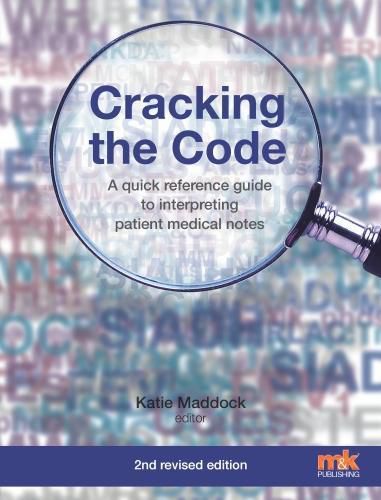
Cracking the Code covers the basics of the contents of patients medical notes from a review of physiological systems to the interpretation of tests and investigations commonly ordered for patients. Common medical terminology used in a review of physiological systems is briefly explained. Commonly encountered investigative procedures are defined and their use explained. Medical laboratory tests are similarly explored. Much of this book concentrates upon the secondary care environment because this remains the main setting in which healthcare professionals have free and open access to patient medical notes. However the expanding roles of healthcare professionals in the primary care sector mean that all practitioners need to be able to unlock the code. It is hoped that this book will therefore be of use not only to the undergraduate pharmacy students for whom it was originally developed, but also to other healthcare professionals who access patient medical notes on a routine basis.
$9.00 standard shipping within Australia
FREE standard shipping within Australia for orders over $100.00
Express & International shipping calculated at checkout
Stock availability can be subject to change without notice. We recommend calling the shop or contacting our online team to check availability of low stock items. Please see our Shopping Online page for more details.
Cracking the Code covers the basics of the contents of patients medical notes from a review of physiological systems to the interpretation of tests and investigations commonly ordered for patients. Common medical terminology used in a review of physiological systems is briefly explained. Commonly encountered investigative procedures are defined and their use explained. Medical laboratory tests are similarly explored. Much of this book concentrates upon the secondary care environment because this remains the main setting in which healthcare professionals have free and open access to patient medical notes. However the expanding roles of healthcare professionals in the primary care sector mean that all practitioners need to be able to unlock the code. It is hoped that this book will therefore be of use not only to the undergraduate pharmacy students for whom it was originally developed, but also to other healthcare professionals who access patient medical notes on a routine basis.
Search our extensive online catalogue.
