Readings Newsletter
Become a Readings Member to make your shopping experience even easier.
Sign in or sign up for free!
You’re not far away from qualifying for FREE standard shipping within Australia
You’ve qualified for FREE standard shipping within Australia
The cart is loading…


This title is printed to order. This book may have been self-published. If so, we cannot guarantee the quality of the content. In the main most books will have gone through the editing process however some may not. We therefore suggest that you be aware of this before ordering this book. If in doubt check either the author or publisher’s details as we are unable to accept any returns unless they are faulty. Please contact us if you have any questions.
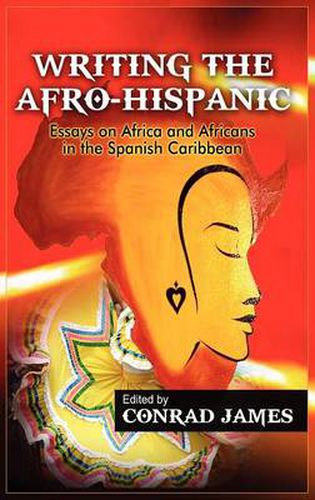
The impact of the African Diaspora in Spanish America is far greater than is understood or acknowledged in the English speaking world. Connected initially to the Spanish-Caribbean through trans-Atlantic slavery, Africa is so deeply ingrained in the biology and culture of these countries that, in the words of the Cuban poet Nicolas Guillen, it would require the work of a ‘miniaturist to disentangle that hieroglyph.’ Through complex explorations of narratives of Spanish Blacks in the Caribbean this collection of essays builds critically on mid and late twentieth century Afro-Hispanist scholarship and thereby amplifies the terms in which Africans in the Americas are generally discussed. Each of these essays deals with a pivotal aspect of the African experience in the Spanish speaking Caribbean from the period of slavery to the present day. The essays focus on Black African cultures in Cuba, Puerto Rico, the Dominican Republic as well as in the circum Caribbean areas of Mexico and Colombia. In the process they cover a vast and highly involved range of issues including abolition and the politics of anti-slavery rhetoric, African women’s political activism, performance poetry and female embodiment of the Black Diaspora, the Cuban Revolution and its investment in African liberation struggles, race and intra-Caribbean migration, ritualised spirituality and African healing practices among others. Through their investigation of both official and popular cultures in the Caribbean not only do the essays in this volume show the indispensable functions of African cultural capital in the Spanish speaking Caribbean but they also underline the multiple demographic, socio-political and institutional imperatives that are at stake in considering contemporary understandings of the African Diaspora. Conrad James received his PhD in Modern Languages at the University of Cambridge and teaches Spanish Caribbean and US Latino literature at the University of Birmingham. He taught previously at the University of Durham and has held visiting positions at the University of California Santa Cruz and the University of Maryland. James has published widely on Cuban women’s writing and Afro-Cuban literature of the 20th century. He has also worked on Dominican and Dominican-American fiction and poetry.
$9.00 standard shipping within Australia
FREE standard shipping within Australia for orders over $100.00
Express & International shipping calculated at checkout
Stock availability can be subject to change without notice. We recommend calling the shop or contacting our online team to check availability of low stock items. Please see our Shopping Online page for more details.
This title is printed to order. This book may have been self-published. If so, we cannot guarantee the quality of the content. In the main most books will have gone through the editing process however some may not. We therefore suggest that you be aware of this before ordering this book. If in doubt check either the author or publisher’s details as we are unable to accept any returns unless they are faulty. Please contact us if you have any questions.
The impact of the African Diaspora in Spanish America is far greater than is understood or acknowledged in the English speaking world. Connected initially to the Spanish-Caribbean through trans-Atlantic slavery, Africa is so deeply ingrained in the biology and culture of these countries that, in the words of the Cuban poet Nicolas Guillen, it would require the work of a ‘miniaturist to disentangle that hieroglyph.’ Through complex explorations of narratives of Spanish Blacks in the Caribbean this collection of essays builds critically on mid and late twentieth century Afro-Hispanist scholarship and thereby amplifies the terms in which Africans in the Americas are generally discussed. Each of these essays deals with a pivotal aspect of the African experience in the Spanish speaking Caribbean from the period of slavery to the present day. The essays focus on Black African cultures in Cuba, Puerto Rico, the Dominican Republic as well as in the circum Caribbean areas of Mexico and Colombia. In the process they cover a vast and highly involved range of issues including abolition and the politics of anti-slavery rhetoric, African women’s political activism, performance poetry and female embodiment of the Black Diaspora, the Cuban Revolution and its investment in African liberation struggles, race and intra-Caribbean migration, ritualised spirituality and African healing practices among others. Through their investigation of both official and popular cultures in the Caribbean not only do the essays in this volume show the indispensable functions of African cultural capital in the Spanish speaking Caribbean but they also underline the multiple demographic, socio-political and institutional imperatives that are at stake in considering contemporary understandings of the African Diaspora. Conrad James received his PhD in Modern Languages at the University of Cambridge and teaches Spanish Caribbean and US Latino literature at the University of Birmingham. He taught previously at the University of Durham and has held visiting positions at the University of California Santa Cruz and the University of Maryland. James has published widely on Cuban women’s writing and Afro-Cuban literature of the 20th century. He has also worked on Dominican and Dominican-American fiction and poetry.
Search our extensive online catalogue.
