Readings Newsletter
Become a Readings Member to make your shopping experience even easier.
Sign in or sign up for free!
You’re not far away from qualifying for FREE standard shipping within Australia
You’ve qualified for FREE standard shipping within Australia
The cart is loading…


This title is printed to order. This book may have been self-published. If so, we cannot guarantee the quality of the content. In the main most books will have gone through the editing process however some may not. We therefore suggest that you be aware of this before ordering this book. If in doubt check either the author or publisher’s details as we are unable to accept any returns unless they are faulty. Please contact us if you have any questions.
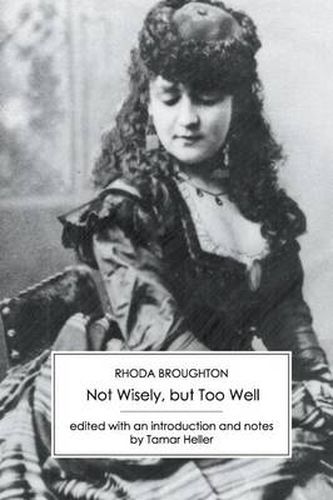
The most thoroughly sensual tale I have read in English for a long time, complained Geraldine Jewsbury in her reader’s report on Rhoda Broughton’s Not Wisely, but Too Well (1867). Initially serialised in The Dublin University Magazine, the novel had been brought to the attention of the publisher Bentley and Son by its editor, J S Le Fanu, who also happened to be Broughton’s uncle. Although Jewsbury convinced Bentley that this novel was unsuitable for decent people , she succeeded only in delaying its publication, as Broughton instead struck a deal with their rival, Tinsley Brothers. While Broughton ultimately triumphed, she was obliged to make extensive revisions, promising to expunge it of coarseness and slanginess, & to rewrite those passages which cannot be toned down . Jewsbury’s moral squeamishness was not shared by the reading public, who were thrilled by Broughton’s vivid depiction of Kate Chester teetering on the brink of an adulterous liaison with the solipsistic and haughty Dare Stamer. Notwithstanding the extensive editorial changes, Broughton’s novel remains a pioneering portrayal of female sexuality, or what Jewsbury called highly coloured & hot blooded passion . Reproducing the text of its first appearance in volume form, this new edition of Not Wisely, but Too Well illuminates the novel’s ideological and aesthetic complexity through appendices related to its publication history, revision, and reception. These appendices include a section containing Jewsbury’s reader’s report and Broughton and Le Fanu’s correspondence with the Bentleys, a list of variants between serial and volume formats of the novel, and a selection of contemporary reviews. Together these materials provide a fascinating case study of the coming to print, and reception, of a controversial Victorian text, while also attesting to the challenges Broughton faced in representing female desire in her early fiction. This completely reset critical edition includes: * Introduction by Tamar Heller * Explanatory footnotes * Rhoda Broughton chronology * Select bibliography * Correspondence from the Bentley Archives relating to Not Wisely, but Too Well * Textual variants between the serialised and three-decker versions, including the original ending * Selection of contemporary reviews and responses.
$9.00 standard shipping within Australia
FREE standard shipping within Australia for orders over $100.00
Express & International shipping calculated at checkout
Stock availability can be subject to change without notice. We recommend calling the shop or contacting our online team to check availability of low stock items. Please see our Shopping Online page for more details.
This title is printed to order. This book may have been self-published. If so, we cannot guarantee the quality of the content. In the main most books will have gone through the editing process however some may not. We therefore suggest that you be aware of this before ordering this book. If in doubt check either the author or publisher’s details as we are unable to accept any returns unless they are faulty. Please contact us if you have any questions.
The most thoroughly sensual tale I have read in English for a long time, complained Geraldine Jewsbury in her reader’s report on Rhoda Broughton’s Not Wisely, but Too Well (1867). Initially serialised in The Dublin University Magazine, the novel had been brought to the attention of the publisher Bentley and Son by its editor, J S Le Fanu, who also happened to be Broughton’s uncle. Although Jewsbury convinced Bentley that this novel was unsuitable for decent people , she succeeded only in delaying its publication, as Broughton instead struck a deal with their rival, Tinsley Brothers. While Broughton ultimately triumphed, she was obliged to make extensive revisions, promising to expunge it of coarseness and slanginess, & to rewrite those passages which cannot be toned down . Jewsbury’s moral squeamishness was not shared by the reading public, who were thrilled by Broughton’s vivid depiction of Kate Chester teetering on the brink of an adulterous liaison with the solipsistic and haughty Dare Stamer. Notwithstanding the extensive editorial changes, Broughton’s novel remains a pioneering portrayal of female sexuality, or what Jewsbury called highly coloured & hot blooded passion . Reproducing the text of its first appearance in volume form, this new edition of Not Wisely, but Too Well illuminates the novel’s ideological and aesthetic complexity through appendices related to its publication history, revision, and reception. These appendices include a section containing Jewsbury’s reader’s report and Broughton and Le Fanu’s correspondence with the Bentleys, a list of variants between serial and volume formats of the novel, and a selection of contemporary reviews. Together these materials provide a fascinating case study of the coming to print, and reception, of a controversial Victorian text, while also attesting to the challenges Broughton faced in representing female desire in her early fiction. This completely reset critical edition includes: * Introduction by Tamar Heller * Explanatory footnotes * Rhoda Broughton chronology * Select bibliography * Correspondence from the Bentley Archives relating to Not Wisely, but Too Well * Textual variants between the serialised and three-decker versions, including the original ending * Selection of contemporary reviews and responses.
Search our extensive online catalogue.
