Readings Newsletter
Become a Readings Member to make your shopping experience even easier.
Sign in or sign up for free!
You’re not far away from qualifying for FREE standard shipping within Australia
You’ve qualified for FREE standard shipping within Australia
The cart is loading…


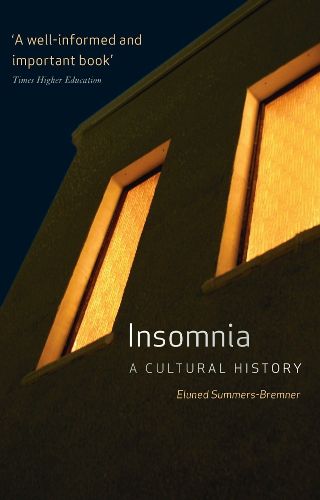
Throughout human history, the condition of habitual sleeplessness known as insomnia has been fraught with contradictory meanings. Deplored and admired, feared and idealized, insomnia persists today not only as an experience of human suffering, but as an indicator of the most charged of contradictions on which advanced societies run and depend. Taking a broad historical sweep, this new book investigates the many-layered versions of sleeplessness and insomnia in culture, from myth and folklore to the arts and popular medicine. Insomnia explores the ancient roots of sleeplessness in classics such as the Mesopotamian epic, Gilgamesh , the Iliad and Odyssey , the Aeneid and the Bible, as well as customs surrounding sleep and waking in Asian culture. It examines medieval and early modern wakefulness related to lovesickness, melancholy, and even demonic possession, and the practice of prayer and vigilance at night. Insomnia further considers the diagnosis of insomnia as a nervous disorder, psychoanalytical interpretations of the condition, and insomnia due to the trauma of war. In Romantic and Gothic literature, insomnia is linked to nightmare worlds and the sublime, and in the nineteenth century the advent of street lighting turned cities into a heady mix of daytime excitement mingled with the dangers of the night. Our contemporary networked world knows neither day nor night, requiring individuals to develop highly flexible and idiosyncratic patterns of work, rest, sleep, and waking. Not surprisingly, contemporary sleeplessness is on the rise, and the financial interests vested in its pharmaceutical management provide only a limited solution to the problem. Highly original, engaging, and rich in historical anecdote, this book is a thorough investigation of a fascinating and persistent cultural phenomenon.
$9.00 standard shipping within Australia
FREE standard shipping within Australia for orders over $100.00
Express & International shipping calculated at checkout
Stock availability can be subject to change without notice. We recommend calling the shop or contacting our online team to check availability of low stock items. Please see our Shopping Online page for more details.
Throughout human history, the condition of habitual sleeplessness known as insomnia has been fraught with contradictory meanings. Deplored and admired, feared and idealized, insomnia persists today not only as an experience of human suffering, but as an indicator of the most charged of contradictions on which advanced societies run and depend. Taking a broad historical sweep, this new book investigates the many-layered versions of sleeplessness and insomnia in culture, from myth and folklore to the arts and popular medicine. Insomnia explores the ancient roots of sleeplessness in classics such as the Mesopotamian epic, Gilgamesh , the Iliad and Odyssey , the Aeneid and the Bible, as well as customs surrounding sleep and waking in Asian culture. It examines medieval and early modern wakefulness related to lovesickness, melancholy, and even demonic possession, and the practice of prayer and vigilance at night. Insomnia further considers the diagnosis of insomnia as a nervous disorder, psychoanalytical interpretations of the condition, and insomnia due to the trauma of war. In Romantic and Gothic literature, insomnia is linked to nightmare worlds and the sublime, and in the nineteenth century the advent of street lighting turned cities into a heady mix of daytime excitement mingled with the dangers of the night. Our contemporary networked world knows neither day nor night, requiring individuals to develop highly flexible and idiosyncratic patterns of work, rest, sleep, and waking. Not surprisingly, contemporary sleeplessness is on the rise, and the financial interests vested in its pharmaceutical management provide only a limited solution to the problem. Highly original, engaging, and rich in historical anecdote, this book is a thorough investigation of a fascinating and persistent cultural phenomenon.
Search our extensive online catalogue.
