Readings Newsletter
Become a Readings Member to make your shopping experience even easier.
Sign in or sign up for free!
You’re not far away from qualifying for FREE standard shipping within Australia
You’ve qualified for FREE standard shipping within Australia
The cart is loading…


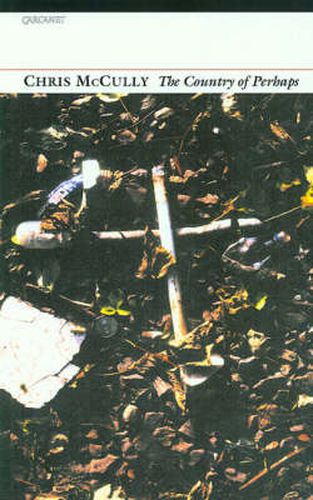
The Country of Perhaps is a work in two parts. Part I, a collection of lyric poems, explores the nature and the power of human illusion, and shows how that power is generated not from ‘cultural forces’ but from the demands of individual choice in the face of implacable circumstance. Thus Icarus, choosing to fly but finally, glad of falling. Thus the fishermen of Santa Monica Pier, retreating into the benevolent defeat of their illusions: ‘Real life’s defeated them across the word’. Part II is composed by Mass, a longer ‘poem for voices’ (the tautology implies that the piece should ideally be read aloud). Based around, and analysing, the various components of the religious Mass, and centred in the meaning of the Eucharist, Mass analyses the Christian guarantee of salvation, and concludes that it, too, is a myth, another necessary invention about truth. One spokesman for this conclusion is Judas Iscariot, who delivers the Homily in terms that may be familiar to those versed in so-called ‘cultural theory’. Another spokesman is the beloved disciple, John, whose voice encompasses an older, wearier and more generous wisdom. Mass is both satire and politics, analysis and elegy. It is McCully’s most ambitious achievement to date.
$9.00 standard shipping within Australia
FREE standard shipping within Australia for orders over $100.00
Express & International shipping calculated at checkout
Stock availability can be subject to change without notice. We recommend calling the shop or contacting our online team to check availability of low stock items. Please see our Shopping Online page for more details.
The Country of Perhaps is a work in two parts. Part I, a collection of lyric poems, explores the nature and the power of human illusion, and shows how that power is generated not from ‘cultural forces’ but from the demands of individual choice in the face of implacable circumstance. Thus Icarus, choosing to fly but finally, glad of falling. Thus the fishermen of Santa Monica Pier, retreating into the benevolent defeat of their illusions: ‘Real life’s defeated them across the word’. Part II is composed by Mass, a longer ‘poem for voices’ (the tautology implies that the piece should ideally be read aloud). Based around, and analysing, the various components of the religious Mass, and centred in the meaning of the Eucharist, Mass analyses the Christian guarantee of salvation, and concludes that it, too, is a myth, another necessary invention about truth. One spokesman for this conclusion is Judas Iscariot, who delivers the Homily in terms that may be familiar to those versed in so-called ‘cultural theory’. Another spokesman is the beloved disciple, John, whose voice encompasses an older, wearier and more generous wisdom. Mass is both satire and politics, analysis and elegy. It is McCully’s most ambitious achievement to date.
Search our extensive online catalogue.
