Readings Newsletter
Become a Readings Member to make your shopping experience even easier.
Sign in or sign up for free!
You’re not far away from qualifying for FREE standard shipping within Australia
You’ve qualified for FREE standard shipping within Australia
The cart is loading…


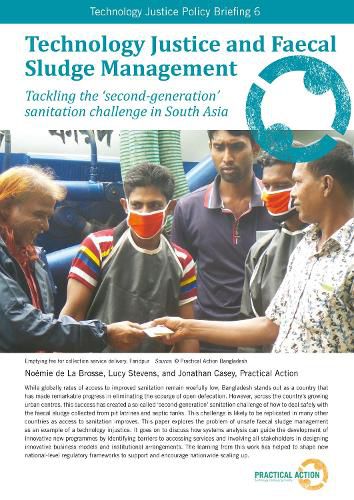
While globally rates of access to improved sanitation remain woefully low, Bangladesh stands out as a country that has made remarkable progress in eliminating the scourge of open defecation. However, across the country’s growing urban centres, this success has created a so-called ‘second-generation’ sanitation challenge of how to deal safely with the faecal sludge collected from pit latrines and septic tanks. This challenge is likely to be replicated in many other countries as access to sanitation improves. This paper explores the problem of unsafe faecal sludge management as an example of a technology injustice. It goes on to discuss how systems analysis can guide the development of innovative new programmes by identifying barriers to accessing services and involving all stakeholders in designing innovative business models and institutional arrangements. The learning from this work has helped to shape new national-level regulatory frameworks to support and encourage nationwide scaling up.
$9.00 standard shipping within Australia
FREE standard shipping within Australia for orders over $100.00
Express & International shipping calculated at checkout
Stock availability can be subject to change without notice. We recommend calling the shop or contacting our online team to check availability of low stock items. Please see our Shopping Online page for more details.
While globally rates of access to improved sanitation remain woefully low, Bangladesh stands out as a country that has made remarkable progress in eliminating the scourge of open defecation. However, across the country’s growing urban centres, this success has created a so-called ‘second-generation’ sanitation challenge of how to deal safely with the faecal sludge collected from pit latrines and septic tanks. This challenge is likely to be replicated in many other countries as access to sanitation improves. This paper explores the problem of unsafe faecal sludge management as an example of a technology injustice. It goes on to discuss how systems analysis can guide the development of innovative new programmes by identifying barriers to accessing services and involving all stakeholders in designing innovative business models and institutional arrangements. The learning from this work has helped to shape new national-level regulatory frameworks to support and encourage nationwide scaling up.
Search our extensive online catalogue.
