Readings Newsletter
Become a Readings Member to make your shopping experience even easier.
Sign in or sign up for free!
You’re not far away from qualifying for FREE standard shipping within Australia
You’ve qualified for FREE standard shipping within Australia
The cart is loading…


This title is printed to order. This book may have been self-published. If so, we cannot guarantee the quality of the content. In the main most books will have gone through the editing process however some may not. We therefore suggest that you be aware of this before ordering this book. If in doubt check either the author or publisher’s details as we are unable to accept any returns unless they are faulty. Please contact us if you have any questions.
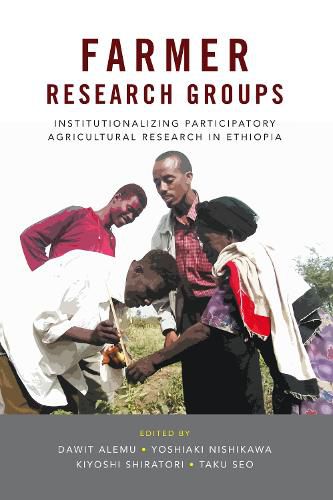
It has long been recognized that agricultural research should involve the farmers themselves. Participatory agricultural research methods have been developed to help farmers and researchers to identify the most appropriate technologies and techniques for a particular area. However, mainstreaming this collaborative approach within government research institutions and extension services has lagged behind. This book describes the Farmers Research Group (FRG) approach by which a multi-disciplinary research team, extension workers and groups of farmers jointly conduct research on selected topics based on farmers’ needs, on farmers’ fields. It also documents the process of institutionalizing the approach within the Ethiopian Agricultural Research Systems including universities. Farmer Research Groups reviews the history of participatory agricultural research, particularly in Ethiopia. It introduces cases of research conducted by FRGs in Ethiopia - both successful and less successful - and describes how issues of research quality, technology dissemination, effectiveness and efficiency are dealt with. Finally, it summarizes the lessons learned and indicates how participatory agricultural research might be applied in sub-Sahara Africa. This book is essential reading for agricultural researchers, extension workers and agricultural policy makers in government departments, universities, research institutions and NGOs, as well as students and lecturers studying participatory methodologies.
$9.00 standard shipping within Australia
FREE standard shipping within Australia for orders over $100.00
Express & International shipping calculated at checkout
Stock availability can be subject to change without notice. We recommend calling the shop or contacting our online team to check availability of low stock items. Please see our Shopping Online page for more details.
This title is printed to order. This book may have been self-published. If so, we cannot guarantee the quality of the content. In the main most books will have gone through the editing process however some may not. We therefore suggest that you be aware of this before ordering this book. If in doubt check either the author or publisher’s details as we are unable to accept any returns unless they are faulty. Please contact us if you have any questions.
It has long been recognized that agricultural research should involve the farmers themselves. Participatory agricultural research methods have been developed to help farmers and researchers to identify the most appropriate technologies and techniques for a particular area. However, mainstreaming this collaborative approach within government research institutions and extension services has lagged behind. This book describes the Farmers Research Group (FRG) approach by which a multi-disciplinary research team, extension workers and groups of farmers jointly conduct research on selected topics based on farmers’ needs, on farmers’ fields. It also documents the process of institutionalizing the approach within the Ethiopian Agricultural Research Systems including universities. Farmer Research Groups reviews the history of participatory agricultural research, particularly in Ethiopia. It introduces cases of research conducted by FRGs in Ethiopia - both successful and less successful - and describes how issues of research quality, technology dissemination, effectiveness and efficiency are dealt with. Finally, it summarizes the lessons learned and indicates how participatory agricultural research might be applied in sub-Sahara Africa. This book is essential reading for agricultural researchers, extension workers and agricultural policy makers in government departments, universities, research institutions and NGOs, as well as students and lecturers studying participatory methodologies.
Search our extensive online catalogue.
