Readings Newsletter
Become a Readings Member to make your shopping experience even easier.
Sign in or sign up for free!
You’re not far away from qualifying for FREE standard shipping within Australia
You’ve qualified for FREE standard shipping within Australia
The cart is loading…


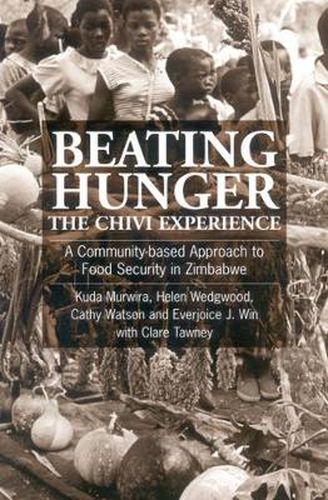
People’s participation in development has been promoted for over 20 years, yet it is still commonplace for development projects to be pre-designed, with little more than token consultation with those they are intended to assist. Within the broad remit of promoting food security, the Chivi project has helped small-scale farmers in the drought-prone and arid communal lands of Zimbabwe to identify their problems and choose their own solutions to them. Central to the project was the attention paid to strengthening existing institutions - the local farmers’ clubs and women’s garden groups - to ensure the continuity of activities after the departure of the project. Also of critical importance was the involvement of the government agricultural extension service from the start of the project, which has meant that the process approach demonstrated in Chivi District is now being taught to other extension workers and adopted throughout the service. The book describes the background of the farmers, and then details the process approach which involved needs-assessment surveys, institutional surveys, participatory planning, awareness-raising training, visits to view new technologies, evaluation and dissemination of new and traditional agricultural techniques and local seed varieties. The ways in which the project sought to strengthen women’s position in the local community without confrontation is also described. The Chivi project has been unique internationally in its combination of the participation of local community institutions with the government’s commitment to the reorganization of its agricultural development services. It is now being replicated elsewhere in Zimbabwe. The successful institutionalization of these methods contains lessons about sustainability for us all.
$9.00 standard shipping within Australia
FREE standard shipping within Australia for orders over $100.00
Express & International shipping calculated at checkout
Stock availability can be subject to change without notice. We recommend calling the shop or contacting our online team to check availability of low stock items. Please see our Shopping Online page for more details.
People’s participation in development has been promoted for over 20 years, yet it is still commonplace for development projects to be pre-designed, with little more than token consultation with those they are intended to assist. Within the broad remit of promoting food security, the Chivi project has helped small-scale farmers in the drought-prone and arid communal lands of Zimbabwe to identify their problems and choose their own solutions to them. Central to the project was the attention paid to strengthening existing institutions - the local farmers’ clubs and women’s garden groups - to ensure the continuity of activities after the departure of the project. Also of critical importance was the involvement of the government agricultural extension service from the start of the project, which has meant that the process approach demonstrated in Chivi District is now being taught to other extension workers and adopted throughout the service. The book describes the background of the farmers, and then details the process approach which involved needs-assessment surveys, institutional surveys, participatory planning, awareness-raising training, visits to view new technologies, evaluation and dissemination of new and traditional agricultural techniques and local seed varieties. The ways in which the project sought to strengthen women’s position in the local community without confrontation is also described. The Chivi project has been unique internationally in its combination of the participation of local community institutions with the government’s commitment to the reorganization of its agricultural development services. It is now being replicated elsewhere in Zimbabwe. The successful institutionalization of these methods contains lessons about sustainability for us all.
Search our extensive online catalogue.
