Readings Newsletter
Become a Readings Member to make your shopping experience even easier.
Sign in or sign up for free!
You’re not far away from qualifying for FREE standard shipping within Australia
You’ve qualified for FREE standard shipping within Australia
The cart is loading…


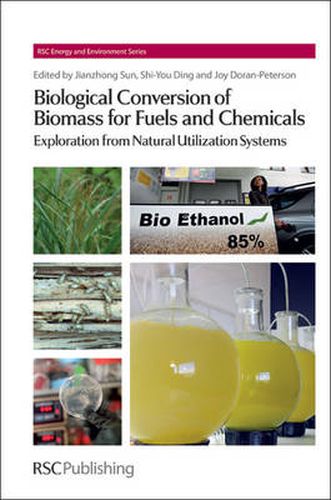
This book is divided into two parts. The first covers biomass modification to facilitate the industrial degradation processing and other characteristics of feedstocks. These include reduction in the general recalcitrance of plant cell wall and downstream processing costs. The second focuses on cutting edge technologies for the conversion of lignocelluloses into biofuels and other products. It describes the most up-to-date advances in natural biomass utilization systems, such as wood-feeding termites and animals that efficiently degrade lignocellulosic substrates. Consolidated bioprocessing (CBP) integrates cellulase production and cellulose hydrolysis, with pentose and hexose fermentation in a single step. This replicates what happens in the digestive systems of animals, such as termites and cows, that effectively degrade lignocellulosic substrates. CBP has the potential to reduce production costs and lower capital investment whilst increasing conversion efficiency. Currently, there are no CBP-enabling micro-organisms suitable for industrial applications. Consequently, this book presents technologies which integrate the lignocellulolytic systems of insects and other animals to advance CBP strategy for cellulosic biofuels. It covers the progress made, and challenges faced, with the utilisation of gene, catalyst, and other unique mechanisms from cellulose-eating animals, as well as cutting-edge technologies developed to reduce the general recalcitrance of feedstocks for processing. This volume makes essential reading for academics and industrial groups concerned with overcoming the challenges inherent in the biological conversion of biomass into fuels and chemicals.
$9.00 standard shipping within Australia
FREE standard shipping within Australia for orders over $100.00
Express & International shipping calculated at checkout
Stock availability can be subject to change without notice. We recommend calling the shop or contacting our online team to check availability of low stock items. Please see our Shopping Online page for more details.
This book is divided into two parts. The first covers biomass modification to facilitate the industrial degradation processing and other characteristics of feedstocks. These include reduction in the general recalcitrance of plant cell wall and downstream processing costs. The second focuses on cutting edge technologies for the conversion of lignocelluloses into biofuels and other products. It describes the most up-to-date advances in natural biomass utilization systems, such as wood-feeding termites and animals that efficiently degrade lignocellulosic substrates. Consolidated bioprocessing (CBP) integrates cellulase production and cellulose hydrolysis, with pentose and hexose fermentation in a single step. This replicates what happens in the digestive systems of animals, such as termites and cows, that effectively degrade lignocellulosic substrates. CBP has the potential to reduce production costs and lower capital investment whilst increasing conversion efficiency. Currently, there are no CBP-enabling micro-organisms suitable for industrial applications. Consequently, this book presents technologies which integrate the lignocellulolytic systems of insects and other animals to advance CBP strategy for cellulosic biofuels. It covers the progress made, and challenges faced, with the utilisation of gene, catalyst, and other unique mechanisms from cellulose-eating animals, as well as cutting-edge technologies developed to reduce the general recalcitrance of feedstocks for processing. This volume makes essential reading for academics and industrial groups concerned with overcoming the challenges inherent in the biological conversion of biomass into fuels and chemicals.
Search our extensive online catalogue.
