Readings Newsletter
Become a Readings Member to make your shopping experience even easier.
Sign in or sign up for free!
You’re not far away from qualifying for FREE standard shipping within Australia
You’ve qualified for FREE standard shipping within Australia
The cart is loading…


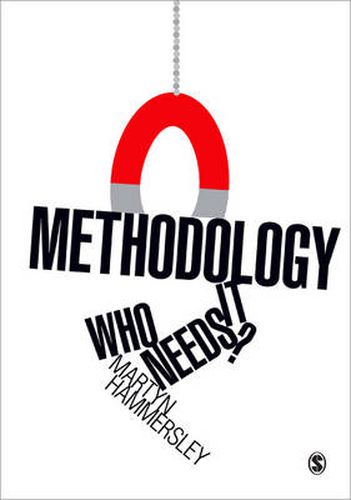
The literature on social science methods and the issues surrounding them has grown massively and continues to increase. Yet many social scientists are ambivalent about methodology. For some, it plays a central, perhaps even an all-encompassing, role; while, for others, it is desirable only in small amounts, or indeed is regarded as an irrelevance, as a distraction from actually doing research. In this book, Hammersley argues that, in large part, this reflects and is part of a wider problem: the gradual decline of a previously influential academic model of inquiry. This has occurred as a result of ideological challenges and the erosion of the institutional conditions that support academic work. He defends this model, spelling out the demands it places upon social scientists, and examining such issues as the proper role of methodology, the nature of objectivity, the false idea that social scientists should be intellectuals or social critics, the dialectic of academic discussion, the ethics of belief, and the limits of academic freedom. More broadly, he also questions the role of the social research within society and what it means to be a social scientist in the 21st century. Hammersley’s book is engagingly written and controversial. It tackles the major issues of contemporary social research methodology head on and is an essential read for anyone with an interest in this field.
$9.00 standard shipping within Australia
FREE standard shipping within Australia for orders over $100.00
Express & International shipping calculated at checkout
Stock availability can be subject to change without notice. We recommend calling the shop or contacting our online team to check availability of low stock items. Please see our Shopping Online page for more details.
The literature on social science methods and the issues surrounding them has grown massively and continues to increase. Yet many social scientists are ambivalent about methodology. For some, it plays a central, perhaps even an all-encompassing, role; while, for others, it is desirable only in small amounts, or indeed is regarded as an irrelevance, as a distraction from actually doing research. In this book, Hammersley argues that, in large part, this reflects and is part of a wider problem: the gradual decline of a previously influential academic model of inquiry. This has occurred as a result of ideological challenges and the erosion of the institutional conditions that support academic work. He defends this model, spelling out the demands it places upon social scientists, and examining such issues as the proper role of methodology, the nature of objectivity, the false idea that social scientists should be intellectuals or social critics, the dialectic of academic discussion, the ethics of belief, and the limits of academic freedom. More broadly, he also questions the role of the social research within society and what it means to be a social scientist in the 21st century. Hammersley’s book is engagingly written and controversial. It tackles the major issues of contemporary social research methodology head on and is an essential read for anyone with an interest in this field.
Search our extensive online catalogue.
