


Restorative Theory in Practice: Insights Into What Works and Why
Belinda Hopkins
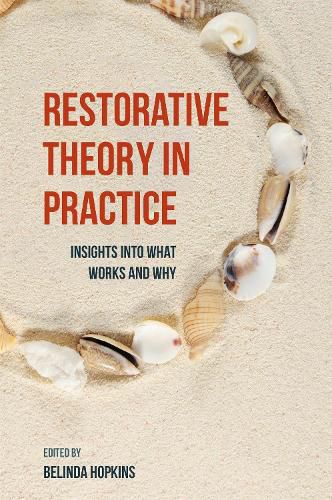
Restorative Theory in Practice: Insights Into What Works and Why
Belinda Hopkins
Restorative practice is an innovative approach to thinking about, and addressing, conflict and bullying, as well as disruptive, challenging and criminal behaviour. The approach is increasingly used to transform the culture of organisations, institutions and services and the way people communicate with one another.
In this book, ten practitioners describe a restorative encounter as seen through the lens of their own theoretical model. The book’s unique structure is modelled on a restorative practice known as Circle Time- comprising of a Check-in, a Main Activity, and a Check-out. In the Check-in the practitioner explains how their own theoretical model informs their practice; in the Main Activity they comment on the same case studies to highlight how each theory can deepen our understanding of what might be happening and why; and in the Check-out they reflect on what they have learned from reading each other’s contributions. This is a unique exemplar of how restorative theory and practice can influence how practitioners think, learn and write about restorative practice.
This will be an invaluable resource for restorative practitioners working across sectors including education, social services, youth offending or policy.
This item is not currently in-stock. It can be ordered online and is expected to ship in approx 4 weeks
Our stock data is updated periodically, and availability may change throughout the day for in-demand items. Please call the relevant shop for the most current stock information. Prices are subject to change without notice.
Sign in or become a Readings Member to add this title to a wishlist.