Readings Newsletter
Become a Readings Member to make your shopping experience even easier.
Sign in or sign up for free!
You’re not far away from qualifying for FREE standard shipping within Australia
You’ve qualified for FREE standard shipping within Australia
The cart is loading…


This title is printed to order. This book may have been self-published. If so, we cannot guarantee the quality of the content. In the main most books will have gone through the editing process however some may not. We therefore suggest that you be aware of this before ordering this book. If in doubt check either the author or publisher’s details as we are unable to accept any returns unless they are faulty. Please contact us if you have any questions.
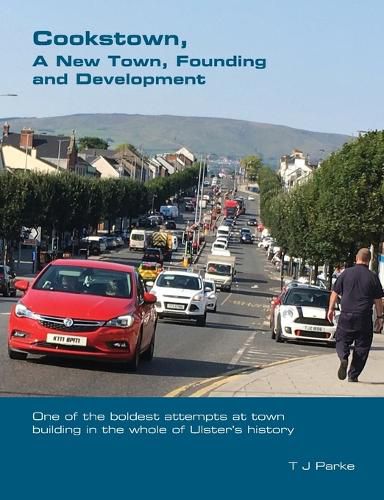
T J Parke grew up in Cookstown. He trained as a geographer and a town planner At an early stage in his career he worked under Gilbert Camblin in the Northern Ireland Civil Service. In Camblin's book "The Town in Ulster", the establishment of Cookstown was described as "one of the boldest attempts at town building during the whole of Ulster's history".
The book sets William Stewart's town building project in the context of events in Irish history which were relevant to development in this part of Ulster. It places particular emphasis on the planning and consequences of the Plantation of Ulster. The role of Scottish settlers in the Cookstown area during the Plantation is described and it also considers the impact of Scottish migrants fleeing the famine conditions of the "Ill Years" in Scotland at the end of the 17th Century. It takes the development of the town through the demise of the Stewart fortunes, the emergence of linen businessmen as owners of the town and then the growing influence of local government institutions in the life of the town. The book also documents how, throughout its entire history, the town has played a vital role as the marketplace for the products of the surrounding countryside and how the railway connections greatly enhanced that role. Finally the book describes how the town has responded to the pressures of the modern era.
$9.00 standard shipping within Australia
FREE standard shipping within Australia for orders over $100.00
Express & International shipping calculated at checkout
Stock availability can be subject to change without notice. We recommend calling the shop or contacting our online team to check availability of low stock items. Please see our Shopping Online page for more details.
This title is printed to order. This book may have been self-published. If so, we cannot guarantee the quality of the content. In the main most books will have gone through the editing process however some may not. We therefore suggest that you be aware of this before ordering this book. If in doubt check either the author or publisher’s details as we are unable to accept any returns unless they are faulty. Please contact us if you have any questions.
T J Parke grew up in Cookstown. He trained as a geographer and a town planner At an early stage in his career he worked under Gilbert Camblin in the Northern Ireland Civil Service. In Camblin's book "The Town in Ulster", the establishment of Cookstown was described as "one of the boldest attempts at town building during the whole of Ulster's history".
The book sets William Stewart's town building project in the context of events in Irish history which were relevant to development in this part of Ulster. It places particular emphasis on the planning and consequences of the Plantation of Ulster. The role of Scottish settlers in the Cookstown area during the Plantation is described and it also considers the impact of Scottish migrants fleeing the famine conditions of the "Ill Years" in Scotland at the end of the 17th Century. It takes the development of the town through the demise of the Stewart fortunes, the emergence of linen businessmen as owners of the town and then the growing influence of local government institutions in the life of the town. The book also documents how, throughout its entire history, the town has played a vital role as the marketplace for the products of the surrounding countryside and how the railway connections greatly enhanced that role. Finally the book describes how the town has responded to the pressures of the modern era.
Search our extensive online catalogue.
