Readings Newsletter
Become a Readings Member to make your shopping experience even easier.
Sign in or sign up for free!
You’re not far away from qualifying for FREE standard shipping within Australia
You’ve qualified for FREE standard shipping within Australia
The cart is loading…


This title is printed to order. This book may have been self-published. If so, we cannot guarantee the quality of the content. In the main most books will have gone through the editing process however some may not. We therefore suggest that you be aware of this before ordering this book. If in doubt check either the author or publisher’s details as we are unable to accept any returns unless they are faulty. Please contact us if you have any questions.
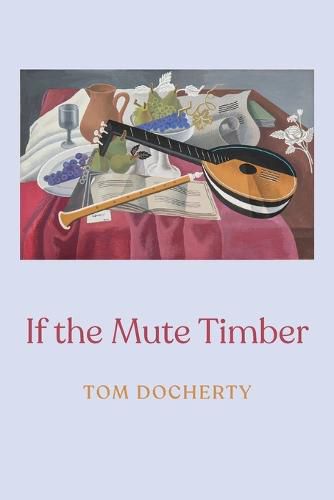
Tom Docherty’s first collection, If the Mute Timber, begins ‘not with a book / nor even an attentive ear’, but with the elusive fragment of its title. The poems situate themselves in medias res: among birds or gravestones, between lines of prayer, in the flux of appearances. Places without words become focal points: the poems seek articulation in life before birth and after death; in animal and imagined lives; in works of music, painting, and architecture; and in the varied silences of human and divine relationships. In one sense, the poems are variations on the vanitas-but the transience of life and its artefacts is transposed to an offering, a potential key in which to register the work. When followed to their natural end, fragments become sentences, notes are sung. If the Mute Timber finds a range of forms-syllabics, near-sonnets, metrically shifting rhyme-patterns-that aim to bring particular sense to the ‘sencelesse’ (as the epigraph from Sidney has it). And not only sense but also sensuousness. The poems seem often to come so close to something as to touch it (or taste it or see it). But what? The sound ‘in another place’, the ‘perfect ending / at which one never arrives’. In their balancing act, looking both back and ahead, these poems cannot end where they have begun; their phrasing brings about change, as to fragments on which new light is cast: ‘yes, it is saying / then, then, then …’.
$9.00 standard shipping within Australia
FREE standard shipping within Australia for orders over $100.00
Express & International shipping calculated at checkout
Stock availability can be subject to change without notice. We recommend calling the shop or contacting our online team to check availability of low stock items. Please see our Shopping Online page for more details.
This title is printed to order. This book may have been self-published. If so, we cannot guarantee the quality of the content. In the main most books will have gone through the editing process however some may not. We therefore suggest that you be aware of this before ordering this book. If in doubt check either the author or publisher’s details as we are unable to accept any returns unless they are faulty. Please contact us if you have any questions.
Tom Docherty’s first collection, If the Mute Timber, begins ‘not with a book / nor even an attentive ear’, but with the elusive fragment of its title. The poems situate themselves in medias res: among birds or gravestones, between lines of prayer, in the flux of appearances. Places without words become focal points: the poems seek articulation in life before birth and after death; in animal and imagined lives; in works of music, painting, and architecture; and in the varied silences of human and divine relationships. In one sense, the poems are variations on the vanitas-but the transience of life and its artefacts is transposed to an offering, a potential key in which to register the work. When followed to their natural end, fragments become sentences, notes are sung. If the Mute Timber finds a range of forms-syllabics, near-sonnets, metrically shifting rhyme-patterns-that aim to bring particular sense to the ‘sencelesse’ (as the epigraph from Sidney has it). And not only sense but also sensuousness. The poems seem often to come so close to something as to touch it (or taste it or see it). But what? The sound ‘in another place’, the ‘perfect ending / at which one never arrives’. In their balancing act, looking both back and ahead, these poems cannot end where they have begun; their phrasing brings about change, as to fragments on which new light is cast: ‘yes, it is saying / then, then, then …’.
Search our extensive online catalogue.
