Readings Newsletter
Become a Readings Member to make your shopping experience even easier.
Sign in or sign up for free!
You’re not far away from qualifying for FREE standard shipping within Australia
You’ve qualified for FREE standard shipping within Australia
The cart is loading…


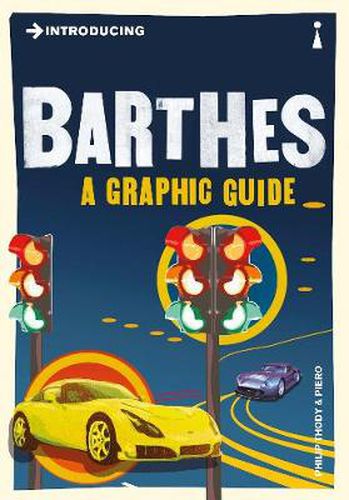
INTRODUCING guide to the cult author, semiologist and analyzer of advertising, Roland Barthes. Roland Barthes is best known as a semiologist, a student of the science of signs. This sees human beings primarily as communicating animals, and looks at the way they use language, clothes, gestures, hair styles, visual images, shapes and colour to convey to one another their tastes, their emotions, their ideal self-image and the values of their society. Introducing Barthes brilliantly elucidates Barthes’ application of these ideas to literature, popular culture, clothes and fashion, and explains why his thinking in this area made him a key figure in the structuralist movement of the 1960s. It goes on to describe how his later insistence on pleasure, the delights of sexual non-conformity, and the freedom of the reader to interpret literary texts in the light of ideologies such as existentialism, Marxism and Freudianism, as well as structuralism itself, continues to make him one of the most dynamic and challenging of modern writers. This is the perfect companion volume to Introducing Semiotics.
$9.00 standard shipping within Australia
FREE standard shipping within Australia for orders over $100.00
Express & International shipping calculated at checkout
Stock availability can be subject to change without notice. We recommend calling the shop or contacting our online team to check availability of low stock items. Please see our Shopping Online page for more details.
INTRODUCING guide to the cult author, semiologist and analyzer of advertising, Roland Barthes. Roland Barthes is best known as a semiologist, a student of the science of signs. This sees human beings primarily as communicating animals, and looks at the way they use language, clothes, gestures, hair styles, visual images, shapes and colour to convey to one another their tastes, their emotions, their ideal self-image and the values of their society. Introducing Barthes brilliantly elucidates Barthes’ application of these ideas to literature, popular culture, clothes and fashion, and explains why his thinking in this area made him a key figure in the structuralist movement of the 1960s. It goes on to describe how his later insistence on pleasure, the delights of sexual non-conformity, and the freedom of the reader to interpret literary texts in the light of ideologies such as existentialism, Marxism and Freudianism, as well as structuralism itself, continues to make him one of the most dynamic and challenging of modern writers. This is the perfect companion volume to Introducing Semiotics.
Search our extensive online catalogue.
