Readings Newsletter
Become a Readings Member to make your shopping experience even easier.
Sign in or sign up for free!
You’re not far away from qualifying for FREE standard shipping within Australia
You’ve qualified for FREE standard shipping within Australia
The cart is loading…


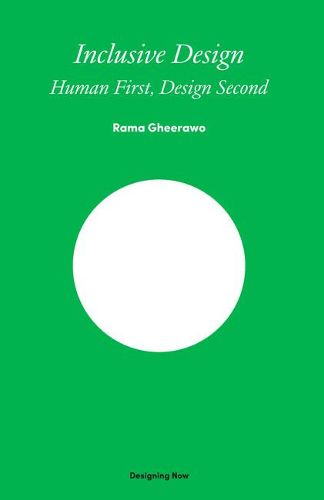
Socially inclusive approaches are an increasingly important part of twenty-first century design. Inclusive design was first defined by the Helen Hamlyn Centre for Design in 1994 and enshrines a people centred approach at the heart of its practice, accounting for all aspects of human diversity. It encourages designers to ensure that their ideas include the widest number of people in their work and carries an increasingly important message to today’s innovators. Most of us are excluded in some way by mainstream design, typically by age and ability, but also by gender, race, geography, or economics. This book clearly and engagingly tells how inclusive design has grown from its inception to become a global idea, examining the characters, milestones, decisions and challenges along the way. As the world grows a social conscience and sees the need to be abjectly more inclusive, the author sets out the aspirations and the capabilities of inclusive design, as well as its application by governments, companies, individuals and the public sector today.
It discusses how inclusive design can and should be linked to sustainable practice, questions who is excluded and why, sets out common misconceptions regarding inclusivity and explains how to engage with people in meaningful, respectful and valuable ways. The book also demonstrates that design can have impact beyond the simple focus on aesthetic practice and function - a common misconception about design over the decades. It includes a wide range of international case studies which illustrate innovative methods, successes and failures in inclusive design, and concludes with a section which offers practical advice on how to be an inclusive designer.
$9.00 standard shipping within Australia
FREE standard shipping within Australia for orders over $100.00
Express & International shipping calculated at checkout
Stock availability can be subject to change without notice. We recommend calling the shop or contacting our online team to check availability of low stock items. Please see our Shopping Online page for more details.
Socially inclusive approaches are an increasingly important part of twenty-first century design. Inclusive design was first defined by the Helen Hamlyn Centre for Design in 1994 and enshrines a people centred approach at the heart of its practice, accounting for all aspects of human diversity. It encourages designers to ensure that their ideas include the widest number of people in their work and carries an increasingly important message to today’s innovators. Most of us are excluded in some way by mainstream design, typically by age and ability, but also by gender, race, geography, or economics. This book clearly and engagingly tells how inclusive design has grown from its inception to become a global idea, examining the characters, milestones, decisions and challenges along the way. As the world grows a social conscience and sees the need to be abjectly more inclusive, the author sets out the aspirations and the capabilities of inclusive design, as well as its application by governments, companies, individuals and the public sector today.
It discusses how inclusive design can and should be linked to sustainable practice, questions who is excluded and why, sets out common misconceptions regarding inclusivity and explains how to engage with people in meaningful, respectful and valuable ways. The book also demonstrates that design can have impact beyond the simple focus on aesthetic practice and function - a common misconception about design over the decades. It includes a wide range of international case studies which illustrate innovative methods, successes and failures in inclusive design, and concludes with a section which offers practical advice on how to be an inclusive designer.
Search our extensive online catalogue.
