Readings Newsletter
Become a Readings Member to make your shopping experience even easier.
Sign in or sign up for free!
You’re not far away from qualifying for FREE standard shipping within Australia
You’ve qualified for FREE standard shipping within Australia
The cart is loading…


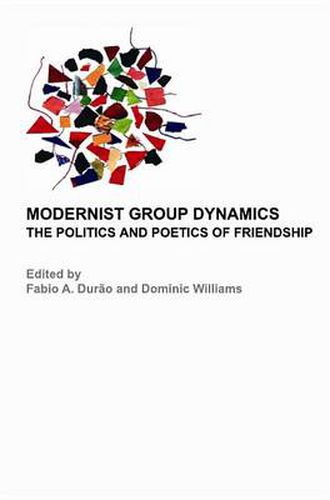
For decades, the study of literary and philosophical modernism concerned solitary figures like the flaneur, the exile, and the lonely genius, but recently the group formations that fostered modernist movements have emerged into view. The essays in Modernist Group Dynamics: The Poetics and Politics of Friendship pursue this new direction in modernist scholarship, exploring the ways artists and intellectuals worked in concert and in conflict. Placing group formations, with all their promises and problems, at the centre of our study allows the contributors-scholars from around the world-to reconsider some of the best-known figures of European modernism, to analyze collaborations across national boundaries, and to recover modernist groups in unexpected contexts like the so-called Third World.
$9.00 standard shipping within Australia
FREE standard shipping within Australia for orders over $100.00
Express & International shipping calculated at checkout
Stock availability can be subject to change without notice. We recommend calling the shop or contacting our online team to check availability of low stock items. Please see our Shopping Online page for more details.
For decades, the study of literary and philosophical modernism concerned solitary figures like the flaneur, the exile, and the lonely genius, but recently the group formations that fostered modernist movements have emerged into view. The essays in Modernist Group Dynamics: The Poetics and Politics of Friendship pursue this new direction in modernist scholarship, exploring the ways artists and intellectuals worked in concert and in conflict. Placing group formations, with all their promises and problems, at the centre of our study allows the contributors-scholars from around the world-to reconsider some of the best-known figures of European modernism, to analyze collaborations across national boundaries, and to recover modernist groups in unexpected contexts like the so-called Third World.
Search our extensive online catalogue.
